Prescription Drug Addiction Treatment
Prescription drugs are an excellent tool for combating various medical disorders when appropriately used under the direction of a doctor. Though they are legal to take without a prescription, many people purchase prescription drugs illegally or take a higher dose than prescribed. This process has led thousands of people to prescription drug addiction.
Some people have the illusion that because prescription drugs are legal, they’re not dangerous to take. When misused, prescription medication can create a physical dependency. At DreamLife Recovery, we offer prescription drug rehab in the Pittsburgh area.
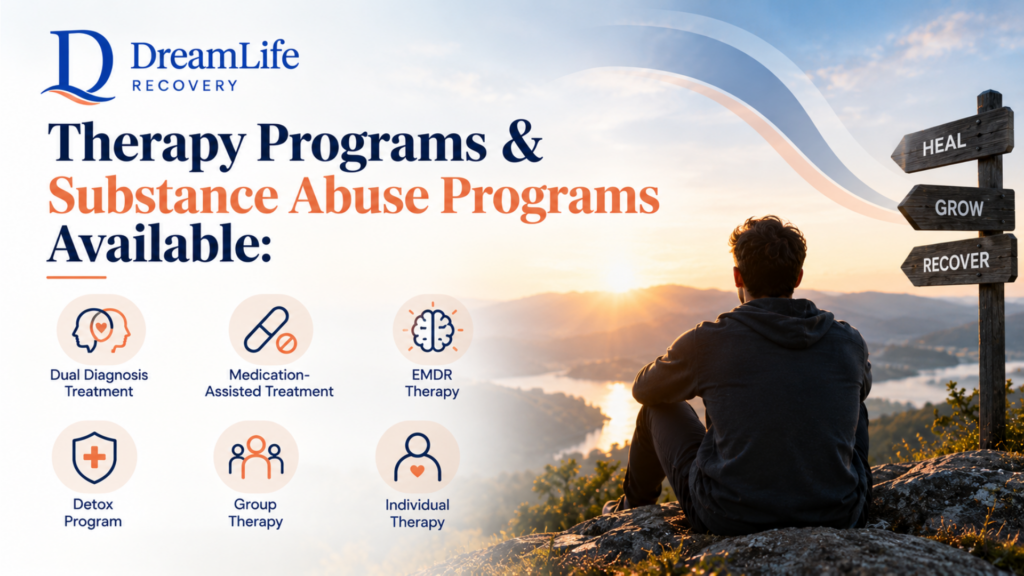
Therapy Programs & Substance Abuse Programs Available:
- Dual Diagnosis Treatment
- Medication-Assisted Treatment
- EMDR Therapy
- Detox Program
- Dual Substance Abuse Programs
- Psychotherapy
- Group Therapy
- Individual Therapy
- Adventure Therapy
- And Many More Programs Crafted To Your Individual Situation
If you are interested in our prescription drug addiction treatment program, give us a call or fill out our form. Our admission process starts with a verification of benefits to provide the most accurate cost estimate for your stay. We’ll then follow up with a medical screening over the phone before preparing your travel arrangements to our recovery center in Donegal, PA.
Get Your DreamLife
Recovery from alcohol and drug addiction is possible, for you or a loved one. We’re here to help.
Get to Know DreamLife Recovery
Our rehab facility in western Pennsylvania allows you to enjoy the peaceful, natural setting while receiving treatment. We provide a safe, comfortable, and caring environment for your recovery. DreamLife Recovery offers a variety of options, which allows us to find a method of therapy that works best for you. We know every person is different, so we individualize each program to find the right fit for you to find success in recovery.
Frequently Asked Questions
1. What are some common prescription drugs that are abused?
Three classes account for most prescription drug misuse: opioid painkillers such as oxycodone, hydrocodone, morphine, codeine and tramadol; central nervous system depressants, including benzodiazepines like Xanax, Valium, Ativan and Klonopin along with sleep medications and barbiturates; and stimulants prescribed for ADHD such as Adderall, Ritalin, Concerta and Vyvanse. Gabapentin and muscle relaxants are also increasingly misused. DreamLife Recovery treats addiction across all of these classes at its Donegal, PA facility.
2. What is the most common prescription drug addiction?
Opioid painkillers are the most commonly misused class of prescription medication and account for the largest share of prescription-related overdose deaths. Benzodiazepines prescribed for anxiety and insomnia are the next most common, followed by prescription stimulants for ADHD. Many people develop more than one dependence at the same time, such as an opioid combined with a benzodiazepine, which raises overdose risk considerably and calls for a treatment plan that addresses both.
3. How to tell if someone is on prescription drugs?
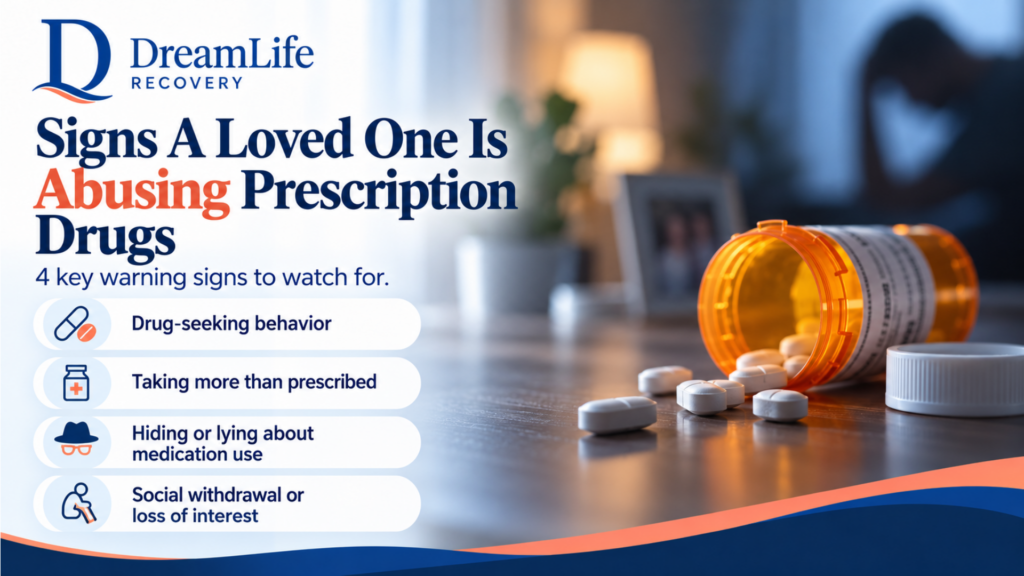
Warning signs include running out of a prescription early, requesting refills ahead of schedule, visiting multiple doctors for the same medication, and taking higher doses than prescribed. Physical signs vary by class: opioids cause drowsiness, constipation, slowed breathing and constricted pupils; depressants cause confusion, poor coordination, slurred speech and memory problems; stimulants cause insomnia, weight loss, agitation and a racing heart. Mood swings, secrecy, missing pills and withdrawal from family or work are common behavioral indicators across all three.
4. What do doctors prescribe for addiction?
It depends on the substance. For opioid addiction, physicians prescribe buprenorphine, methadone, or naltrexone as medication-assisted treatment to control withdrawal and cravings. For benzodiazepine dependence, there is no replacement medication; instead, a doctor manages a gradual taper, often substituting a longer-acting benzodiazepine, because stopping abruptly can cause seizures. No medication is FDA-approved for stimulant addiction, so treatment relies on behavioral therapy, with medication used only for specific symptoms such as depression or insomnia.
5. How long is rehab for prescription drugs?
Detox typically takes about five to seven days, though a benzodiazepine taper can run considerably longer. DreamLife Recovery’s residential program runs 30 to 90 days depending on the individual, and many people then step down into partial hospitalization and intensive outpatient care. The right length depends on which drug class is involved, how long it was taken, whether more than one substance is in play, and whether a co-occurring mental health condition needs treating at the same time.