An evidence-based treatment program for individuals experiencing gambling disorder or problematic gambling behaviors, integrated within DreamLife Recovery’s full continuum of addiction care.
Program Overview
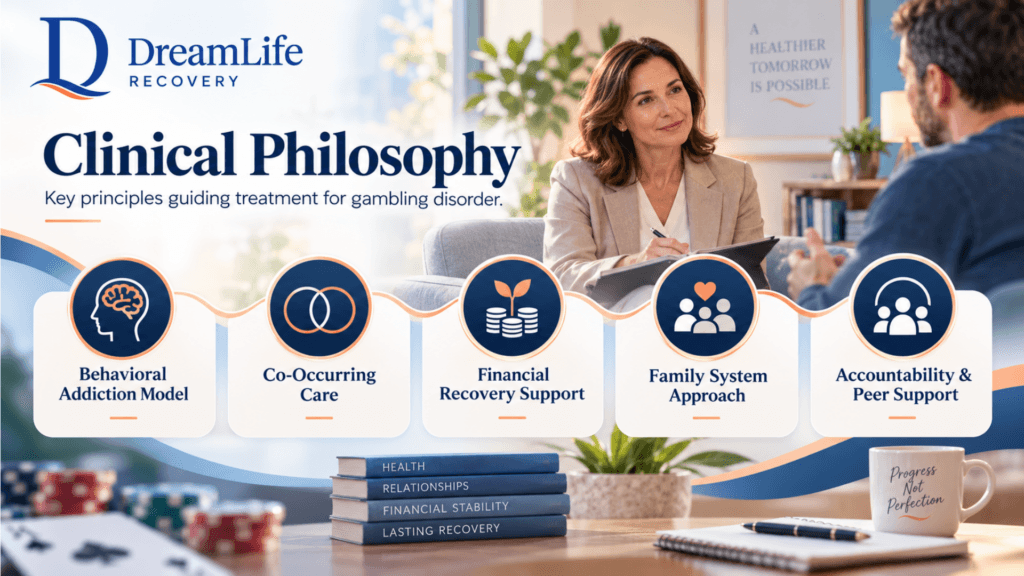
The DreamLife Recovery Gambling Disorder Treatment Track is a specialized clinical program designed to treat individuals experiencing gambling disorder or problematic gambling behaviors, particularly those with co-occurring substance use. This track integrates evidence-based behavioral therapies, financial rehabilitation, family engagement, and relapse-prevention planning to address the psychological, behavioral, and financial consequences of gambling addiction.
The program is structured to operate within DreamLife Recovery’s existing detox, residential, PHP, and IOP levels of care, allowing individuals with gambling disorder to receive targeted treatment while participating in comprehensive recovery programming.
Research shows gambling disorder commonly co-occurs with substance use disorders, occurring 4 to 5 times more often among people with SUDs than in the general population, making screening and integrated treatment critical in addiction settings.
Program Goals:
- Identify and treat gambling disorder alongside co-occurring substance use and mental health conditions
- Reduce financial, relational, and emotional harm caused by gambling behaviors
- Teach cognitive, behavioral, and financial recovery skills for long-term independence
- Strengthen family support systems and rebuild trust damaged by gambling
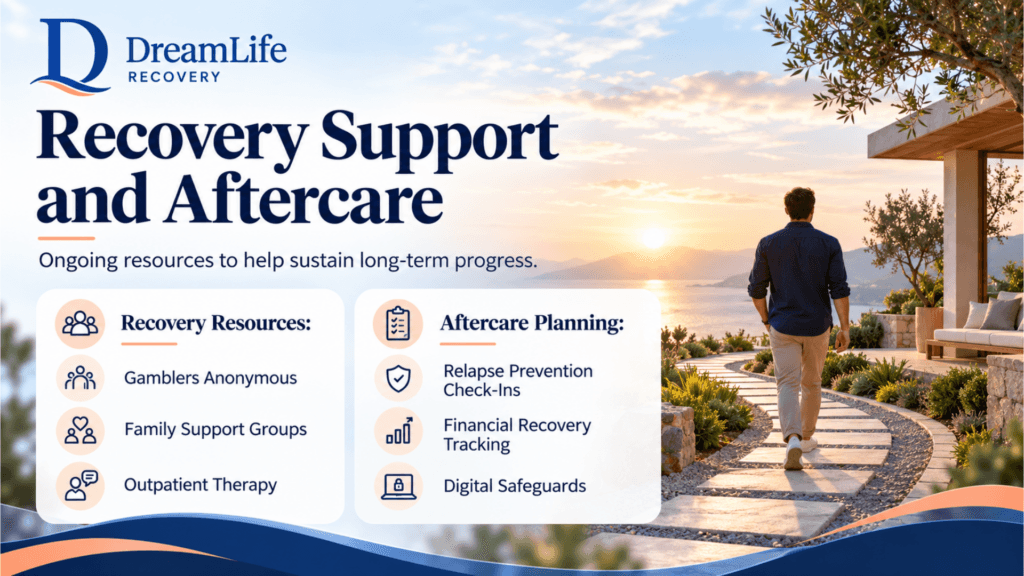
- Establish long-term relapse prevention and connect clients with ongoing recovery supports
Program Alignment:
This program aligns with guidance from the Substance Abuse and Mental Health Services Administration (SAMHSA), Pennsylvania Department of Drug and Alcohol Programs (DDAP), The Joint Commission behavioral health standards, and the National Council on Problem Gambling clinical recommendations.
Take the First Step Toward Recovery
Our admissions team is available around the clock to answer questions, verify insurance, and coordinate same-day admissions when needed.
Frequently Asked Questions
1. Is gambling disorder a real addiction?
Yes. Gambling disorder is recognized in the DSM-5 as a behavioral addiction, classified alongside substance use disorders because it affects the same reward and decision-making pathways in the brain. DreamLife Recovery treats it as a behavioral addiction involving impaired decision-making and reward processing, not a matter of discipline or willpower.
2. How is gambling disorder diagnosed?
Every client at DreamLife Recovery is screened for gambling behaviors during intake using validated tools including the Brief Biosocial Gambling Screen (BBGS), the Problem Gambling Severity Index (PGSI) and DSM-5 criteria. Screening everyone at intake matters because gambling disorder frequently goes undetected alongside a substance use disorder, and treating only the substance leaves the gambling untreated.
3. What does gambling disorder treatment include?
The track combines individual therapy focused on gambling triggers, cognitive distortions and financial patterns with weekly specialized gambling recovery groups. It also includes financial counseling covering debt, budgeting and credit repair, family education and therapy, psychoeducation on the neurobiology of gambling, and relapse prevention planning that covers casino self-exclusion and website blocking. Therapies used include CBT, motivational interviewing, acceptance and commitment therapy, and trauma-informed care where indicated.
4. Can gambling disorder be treated at the same time as a substance use disorder?
Yes, and it usually should be. The Gambling Disorder Track is integrated into DreamLife Recovery’s full continuum of care, so it runs alongside detox, residential, partial hospitalization and intensive outpatient treatment rather than as a separate program. Treating one addiction while leaving the other unaddressed is a common cause of relapse.
5. Does insurance cover gambling disorder treatment?
Often, yes, though it usually falls under behavioral or mental health benefits rather than substance use coverage, and it varies more by plan than addiction treatment does. Some plans name gambling disorder explicitly, others cover it under general mental health services, and a few exclude it. DreamLife Recovery’s admissions team verifies benefits at no cost and provides a clear estimate before admission.