Substance Abuse Treatment
Substance abuse can have devastating effects on a person’s life. The path to recovery may seem far away, but the right substance abuse recovery program can give you the treatment you need to change your habits.
Our substance abuse treatment considers the whole person, addressing what challenges they have been struggling with in body, mind, and spirit that caused them to begin using alcohol to deal with these issues. DreamLife Recovery personalizes each individual’s treatment experience during their stay at our residential addiction treatment facility.
Therapy Programs & Substance Abuse Programs Available:
- Dual Diagnosis Treatment
- Medication-Assisted Treatment
- EMDR Therapy
- Detox Program
- Dual Substance Abuse Programs
- Psychotherapy
- Group Therapy
- Individual Therapy
- Adventure Therapy
- And Many More Programs Crafted To Your Individual Situation
If you are interested in our drug addiction treatment program, give us a call or fill out our form. Our admission process starts with a verification of benefits to provide the most accurate cost estimate for your stay. We’ll then follow up with a medical screening over the phone before preparing your travel arrangements to our recovery center in Donegal, PA.
Get Your DreamLife
Recovery from alcohol and drug addiction is possible, for you or a loved one. We’re here to help.
Common Causes and Risk Factors of Substance Abuse
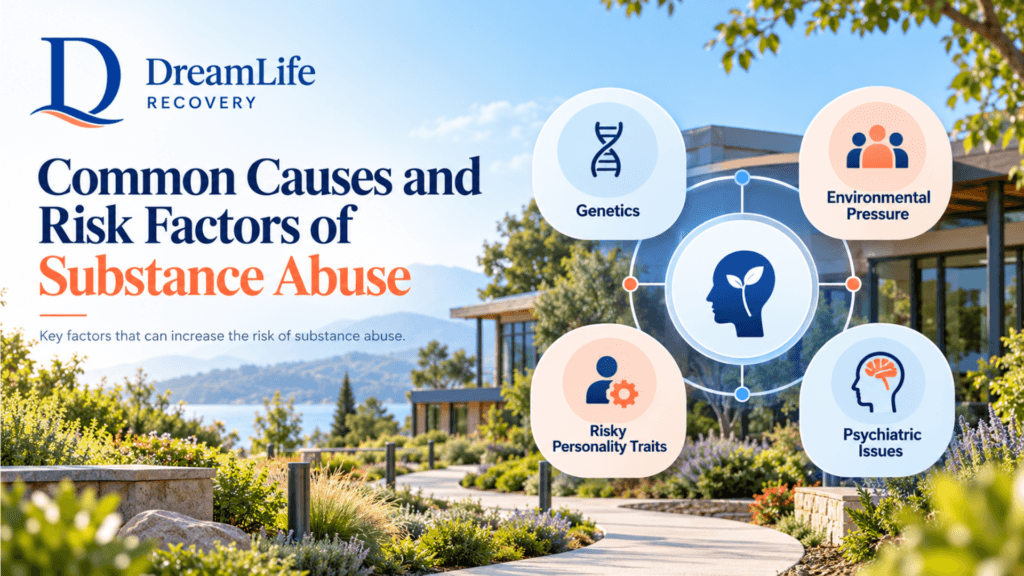
Some people are at risk of substance abuse depending on their environment, while others may have learned to normalize addiction through their upbringing. There is no one cause of substance abuse, but there are many things we can identify as common risk factors. The following are a few examples:
• Genetics: Scientists are still learning about the connection between genetics and addiction, but we know that there is one. Your genetic relationship to someone with addiction may affect your brain’s response to substances and increase your risk.
• Social or environmental pressure: Your environment determines how you see the world and develop your behaviors. If you grew up in an area with normalized substance abuse, you might be more likely to develop an addiction.
• Personality or disposition: We often hear people discuss “addictive personalities.” Though there is no universal characteristic of addiction, some people willing to engage in risky behaviors may struggle to find their way out.
• Psychiatric issues: People with mood disorders may begin self-medicating with drugs or alcohol and become addicted. Mental illnesses like anxiety or depression are risk factors for this reason, although they are not guaranteed causes.
Get to Know DreamLife Recovery
Our rehab facility in western Pennsylvania allows you to enjoy the peaceful, natural setting while receiving treatment. We provide a safe, comfortable, and caring environment for your recovery. DreamLife Recovery offers a variety of options, which allows us to find a method of therapy that works best for you. We know every person is different, so we individualize each program to find the right fit for you to find success in recovery.
Frequently Asked Questions
1. What is the most effective treatment for addiction?
No single treatment works for everyone. The most effective approach combines medically supervised detox when it is needed, evidence-based behavioral therapy such as CBT and DBT, medication-assisted treatment where appropriate, care for any co-occurring mental health condition, and a structured aftercare plan. Programs that keep a person engaged long enough to build new coping skills produce the best outcomes, which is why DreamLife Recovery creates a personalized plan after a comprehensive evaluation rather than applying one standard protocol.
2. What types of rehab programs are there?
The main levels of care are medical detox, residential or inpatient rehab, partial hospitalization (PHP), intensive outpatient (IOP), standard outpatient treatment, and aftercare options such as sober living and alumni support. DreamLife Recovery offers medical detox with medication-assisted treatment, a 30-day residential program, PHP and intensive outpatient care, plus specialty tracks for working professionals, young adults, veterans, first responders, and the LGBTQIA+ community.
3. How long does a substance abuse program last?
Detox usually lasts three to seven days, inpatient or residential rehab commonly runs about 30 days, and partial hospitalization and intensive outpatient care add several more weeks or months. Many people complete 60 to 90 days across those levels of care, and longer time in treatment is linked to better long-term results. The right length depends on the substance involved, how long and how heavily it was used, and whether a co-occurring mental health condition needs treatment at the same time.
4. What is the main difference between inpatient and outpatient care?
Inpatient or residential treatment means living at the facility full time with 24-hour clinical support, daily structure and no access to drugs or alcohol. Outpatient care, including PHP and IOP, allows a person to live at home or in sober living while attending treatment on a set schedule. Inpatient suits a severe addiction, a history of relapse or an unstable home environment, while outpatient works well as a step down from residential care or for a milder addiction with strong support at home.
5. Does insurance pay for substance abuse treatment?
Yes. Most major health plans cover substance abuse treatment, and federal parity rules require many plans to cover it comparably to other medical care. The amount covered varies by plan and by level of care, so the details matter. DreamLife Recovery accepts many major insurance providers, and its admissions specialists verify benefits at no cost and provide a cost estimate before admission. The 24/7 admissions line is (844) 402-3592.