Dual Diagnosis Treatment & Therapy
Dual diagnosis is a therapeutic methodology to treat co-occurring disorders. Co-occurring disorders means a person suffers from a mental health disorder and a substance use disorder, so dual diagnosis was developed to address both issues simultaneously rather than separately.
Often a person with a mental health disorder may develop the habit of using substances like alcohol or drugs to deal with the symptoms they are experiencing, and this leads to a cyclical issue that requires individualized and comprehensive treatment. Our dual diagnosis program at DreamLife Recovery is personalized to each client starting with a comprehensive evaluation to craft a recovery plan to help them find lifelong sobriety.
Detox Programs and Therapies Available:
- Alcohol Abuse
- Opiate Abuse
- Heroin Abuse
- Xanax Abuse
- Amphetamine, Cocaine, Sedative & More Substance Abuse Programs
- EMDR Therapy
- Group Therapy
- Individual Therapy
- Adventure Therapy
- And Many More Programs Crafted To Your Individual Situation
If you are interested in our Dual Diagnosis addiction treatment, give us a call or fill out our form. Our admission process starts with a verification of benefits to provide the most accurate cost estimate for your stay. We’ll then follow up with a medical screening over the phone before preparing your travel arrangements to our recovery center in Donegal, PA.
Get Your DreamLife
Recovery from alcohol and drug addiction is possible, for you or a loved one. We’re here to help.

Dual Diagnosis Rehab Program
A dual diagnosis treatment center will use a range of treatment modalities in their program to address co-occurring disorders with the intention of treating the underlying cause of the addiction, which is often the mental health condition that may or may not have been diagnosed.
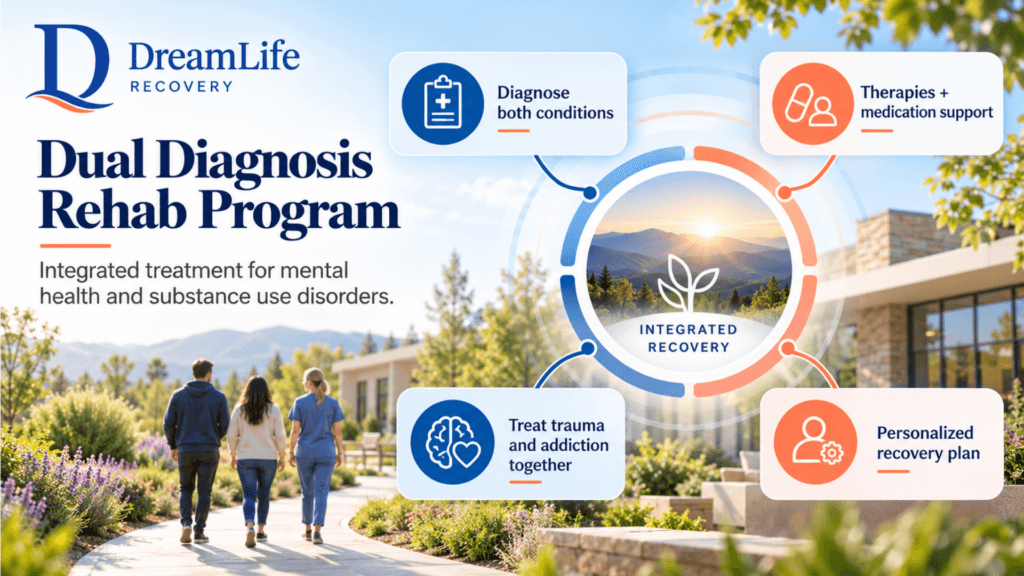
The first step to dual diagnosis treatment is diagnosing both disorders. Then, through a combination of talk therapies like CBT and DBT, psychotherapies like EMDR, medication-assisted treatment, and holistic therapies like yoga and meditation, the treatment team at the facility can begin to help the individual to understand their condition better and manage it.
Addressing past traumas, treating the mental health disorder with medication and talk therapy, establishing healthy sleep hygiene, diet, exercise and stress management practices all of these are key elements of a dual diagnosis treatment plan that will get at the root of the substance use disorder and treat the mental health disorder. Dual diagnosis rehabilitation centers spend time with individuals first to provide personalized and effective treatment.
Get to Know DreamLife Recovery
Our rehab facility in western Pennsylvania allows you to enjoy the peaceful, natural setting while receiving treatment. We provide a safe, comfortable, and caring environment for your recovery. DreamLife Recovery offers a variety of options, which allows us to find a method of therapy that works best for you. We know every person is different, so we individualize each program to find the right fit for you to find success in recovery.
Frequently Asked Questions
1. What is a dual diagnosis and how does it affect someone?
A dual diagnosis, also called a co-occurring disorder, means a person has both a substance use disorder and a mental health condition such as depression, anxiety, bipolar disorder, or PTSD at the same time. The two conditions feed each other: untreated mental health symptoms often drive drinking or drug use, and substance use makes those symptoms worse. Because the symptoms overlap, a dual diagnosis is easy to miss, which is why DreamLife Recovery begins with a comprehensive clinical evaluation before building a personalized treatment plan.
2. What is the best treatment for dual diagnosis?
Integrated treatment, where one clinical team treats the addiction and the mental health condition at the same time, is considered the gold standard. Treating only one side of a dual diagnosis leaves the other untreated and sharply raises the risk of relapse. At DreamLife Recovery in Donegal, PA, integrated care can include medical detox with medication-assisted treatment, a 30-day residential program, partial hospitalization and intensive outpatient care, combined with CBT, DBT, EMDR, trauma therapy, family therapy and holistic options such as yoga and meditation.
3. What are the most common co-occurring disorders?
The mental health conditions seen most often alongside addiction are depression, generalized anxiety, bipolar disorder, PTSD and other trauma-related disorders, ADHD and personality disorders. Alcohol and opioid use disorders are the substance use disorders most commonly paired with them. Each combination responds to a different mix of therapy and medication, so treatment is matched to the specific diagnoses rather than delivered as a single standard program.
4. What are the signs and symptoms of dual diagnosis?
Common signs include using drugs or alcohol to manage moods, anxiety, or sleep, withdrawing from family and friends, sudden swings in mood or energy, declining performance at work or school, rising tolerance, and mental health symptoms that return or worsen every time substance use increases. A previous treatment attempt that addressed only the addiction or only the mental health condition is another strong indicator. Only a professional assessment can confirm a dual diagnosis.
5. How long does dual diagnosis rehab take?
Most people begin with detox, which commonly takes three to seven days, followed by a residential stay of around 30 days. Many then step down through a partial hospitalization program and intensive outpatient care, so a full course of treatment often runs 60 to 90 days or longer. Because dual diagnosis care also involves stabilizing a mental health condition, it frequently takes longer than treatment for substance use alone, and therapy, aftercare planning and alumni support continue after the program ends.