Stimulant Addiction Treatment
Stimulants are a highly addictive category of drugs and typically fall into the amphetamine class. They are intended to increase alertness and attention while providing physical and mental energy. They also have direct effects on the body and can elevate blood pressure, heart rate, and breathing. Stimulant addiction treatment can help people stop using and begin on the path to recovery.
Our stimulant addiction treatment considers the whole person, addressing what challenges they have been struggling with in body, mind, and spirit that caused them to begin using stimulants to deal with these issues. DreamLife Recovery personalizes each individual’s treatment experience during their stay at our residential addiction treatment facility.
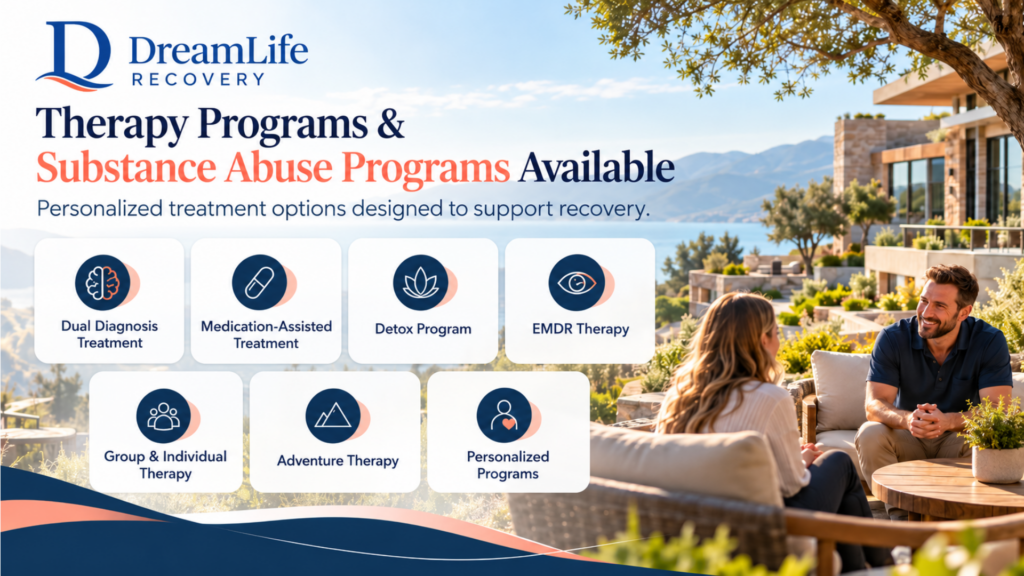
Therapy Programs & Substance Abuse Programs Available:
- Dual Diagnosis Treatment
- Medication-Assisted Treatment
- EMDR Therapy
- Detox Program
- Dual Substance Abuse Programs
- Psychotherapy
- Group Therapy
- Individual Therapy
- Adventure Therapy
- And Many More Programs Crafted To Your Individual Situation
If you are interested in our stimulant addiction treatment program, give us a call or fill out our form. Our admission process starts with a verification of benefits to provide the most accurate cost estimate for your stay. We’ll then follow up with a medical screening over the phone before preparing your travel arrangements to our recovery center in Donegal, PA.
Get Your DreamLife
Recovery from alcohol and drug addiction is possible, for you or a loved one. We’re here to help.
Get to Know DreamLife Recovery
Our rehab facility in western Pennsylvania allows you to enjoy the peaceful, natural setting while receiving treatment. We provide a safe, comfortable, and caring environment for your recovery. DreamLife Recovery offers a variety of options, which allows us to find a method of therapy that works best for you. We know every person is different, so we individualize each program to find the right fit for you to find success in recovery.
Frequently Asked Questions
1. How is stimulant addiction treated?
Treatment combines a supervised withdrawal period with structured behavioral therapy, since no medication is FDA-approved for stimulant use disorder. DreamLife Recovery provides detox, a 30-day residential program, partial hospitalization and intensive outpatient care, built around cognitive behavioral therapy, individual, group and family therapy, EMDR and adventure therapy. Treating any co-occurring mental health condition is a core part of the plan, and aftercare, sober living and relapse prevention support continue after the program ends.
2. What are signs of stimulant addiction?
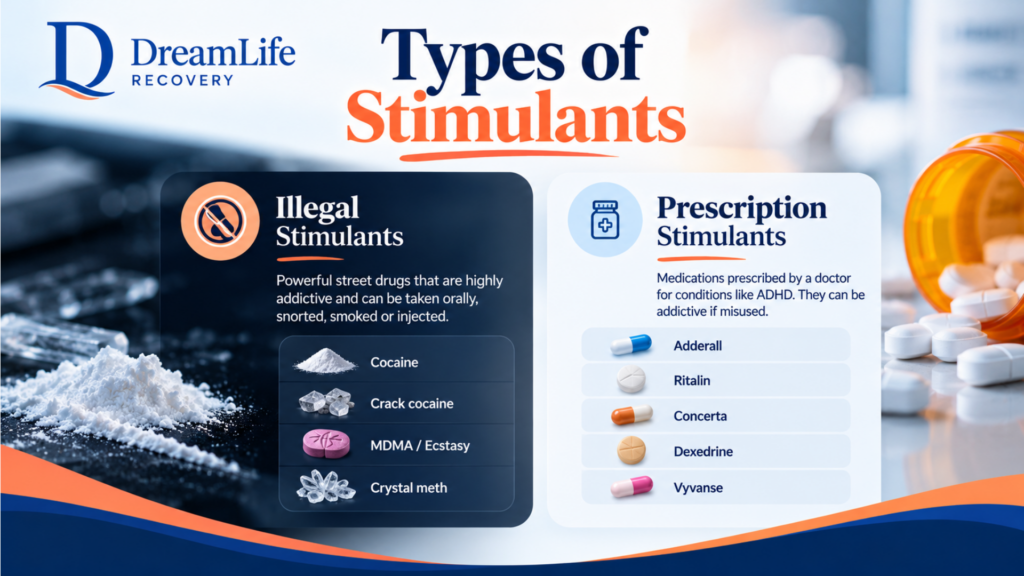
Signs include needing larger doses for the same effect, using prescription stimulants such as Adderall, Ritalin, Concerta, Dexedrine or Vyvanse in ways they were not prescribed, and binge patterns followed by long crashes. Physical and behavioral indicators include weight loss, insomnia, a racing heart, anxiety, paranoia, irritability and sharp mood swings. Continuing to use despite declining health, strained relationships or trouble at work or school is the clearest sign that use has become a disorder.
3. What is used for stimulant withdrawal?
There is no FDA-approved medication for stimulant withdrawal, so care focuses on supervised supportive treatment. That means monitoring through the crash phase, restoring sleep and nutrition, and treating specific symptoms such as depression, anxiety or agitation with appropriate medication. Because the depression and cravings during stimulant withdrawal can be severe, medical and psychiatric supervision is strongly recommended rather than attempting it alone.
4. What are the most effective evidence-based treatments for stimulant use disorder?
Contingency management, which gives structured incentives for verified abstinence, has the strongest evidence base for stimulant use disorder. Cognitive behavioral therapy, the Matrix Model, motivational interviewing and community reinforcement approaches are also well supported. These work best inside a structured program that provides enough time in treatment, addresses co-occurring mental health conditions and continues into aftercare rather than ending at detox.
5. Can your brain recover from stimulants?
Yes, to a significant degree. Research on stimulant users shows that dopamine function and cognitive abilities such as memory, attention and impulse control improve with sustained abstinence, with much of that recovery occurring across the first one to two years. Recovery is gradual and some changes may persist after heavy long-term use, but sleep, mood and concentration typically improve steadily, and staying in structured treatment through the early months supports the process.