Heroin Addiction Treatment
Heroin addiction can feel hopeless, but studies show that treatment for heroin abuse is effective and can help people live long, healthy lives in recovery. Treatment for the effects of heroin abuse should address an individual’s unique physical and psychological needs through a range of therapies while creating an aftercare plan that will set them up for success in recovery.
Our heroin rehab center in Donegal, PA has a detox center and inpatient treatment that is personalized to each individual with a team of addiction professionals on staff to guide them to recovery from heroin addiction. We treat withdrawal symptoms, allowing for an easier trip through the detox process.
Therapy Programs & Substance Abuse Programs Available:
- Dual Diagnosis Treatment
- Medication-Assisted Treatment
- EMDR Therapy
- Detox Program
- Dual Substance Abuse Programs
- Psychotherapy
- Group Therapy
- Individual Therapy
- Adventure Therapy
- And Many More Programs Crafted To Your Individual Situation
If you are interested in our alcohol addiction treatment program, give us a call or fill out our form. Our admission process starts with a verification of benefits to provide the most accurate cost estimate for your stay. We’ll then follow up with a medical screening over the phone before preparing your travel arrangements to our recovery center in Donegal, PA.
Get Your DreamLife
Recovery from alcohol and drug addiction is possible, for you or a loved one. We’re here to help.
Get to Know DreamLife Recovery
Our rehab facility in western Pennsylvania allows you to enjoy the peaceful, natural setting while receiving treatment. We provide a safe, comfortable, and caring environment for your recovery. DreamLife Recovery offers a variety of options, which allows us to find a method of therapy that works best for you. We know every person is different, so we individualize each program to find the right fit for you to find success in recovery.
Frequently Asked Questions
1. What is the typical timeline for heroin withdrawal symptoms?
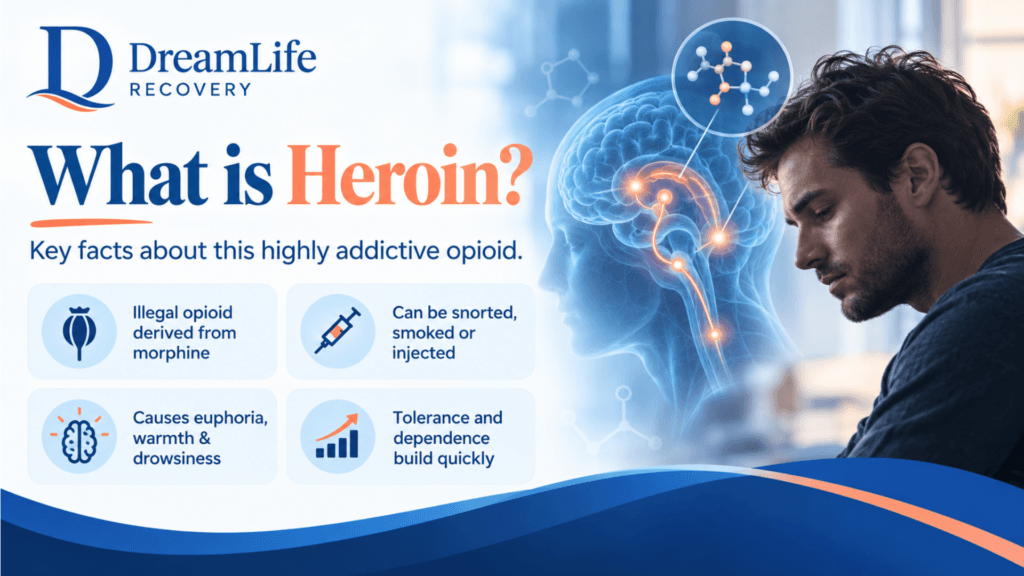
Heroin withdrawal usually begins 6 to 12 hours after the last dose, peaks between 48 and 72 hours, and eases over roughly five to seven days. Symptoms include muscle and bone pain, nausea, vomiting, diarrhea, chills, sweating, insomnia, agitation and intense cravings. Because most street heroin now contains fentanyl, withdrawal can start later, last longer and feel more severe than the classic timeline, and some people experience lingering sleep problems, anxiety and cravings for weeks afterward.
2. How long do people stay in rehab for heroin?
Medical detox typically takes about five to seven days, and most people follow it with a residential stay of around 30 days. Many then continue in a partial hospitalization program and intensive outpatient care, bringing total treatment to 60 to 90 days or more. Opioid addiction generally calls for longer care than many other substances, and medication-assisted treatment, relapse prevention therapy and aftercare often continue well beyond the residential stay.
3. What are some forms of treatment available to those suffering from opioid addiction?
Treatment usually starts with medically supervised detox, often supported by medication-assisted treatment using buprenorphine, methadone or naltrexone to manage withdrawal and cravings. That is followed by residential care, partial hospitalization or intensive outpatient treatment, with therapies such as cognitive behavioral therapy, EMDR, individual, group and family therapy, adventure therapy and mind-body practices including yoga and meditation. Dual diagnosis care for an underlying mental health condition and an aftercare plan with relapse prevention complete the continuum.
4. Can you detox from heroin at home?
Detoxing from heroin alone is strongly discouraged. Dehydration from repeated vomiting and diarrhea can become medically dangerous; the symptoms are severe enough that most people return to use before withdrawal is over, and tolerance drops quickly, so relapsing at a previous dose carries a high risk of fatal overdose. Medically supervised detox provides monitoring, medication to ease symptoms, and a direct transition into treatment, which is how DreamLife Recovery handles heroin detox at its facility in Donegal, PA.
5. What is the recovery rate from heroin?
Opioid use disorder is a chronic condition and relapse is common, especially in the first year, so no single recovery figure applies to everyone. Outcomes improve substantially when a person completes a full continuum of care instead of detox alone and stays on medication-assisted treatment, since buprenorphine and methadone are shown to reduce relapse and overdose deaths. Continued therapy, sober living, alumni support and a relapse prevention plan further improve long-term results.