At DreamLife Recovery in Donegal, PA, we understand that addiction recovery is a lifelong journey. Completing a program is a significant milestone, but it’s just the beginning of maintaining lasting sobriety. That’s why our relapse prevention therapy is a critical component of our addiction therapy programs. We provide personalized care designed to equip our clients with the tools and strategies necessary for a successful recovery and long-term freedom from addiction.
Get Your DreamLife
Recovery from alcohol and drug addiction is possible, for you or a loved one. We’re here to help.
DreamLife Recovery Treatment Programs
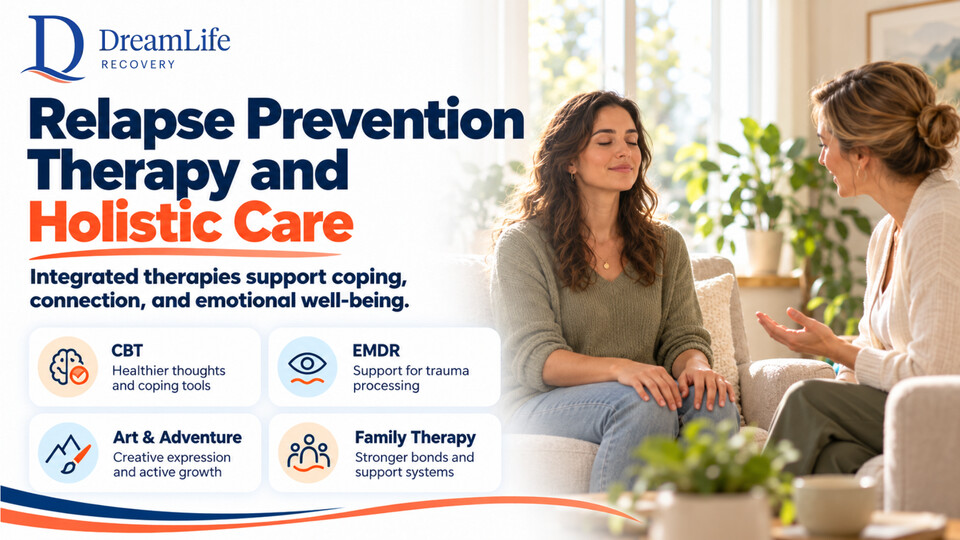
DreamLife Recovery offers clients a variety of specialized treatment options during their stay at our facility in Donegal, Pennsylvania. These may range depending on the precise needs of the individual, delivered by our expertly trained and clinically accredited staff. Once admitted, clients are assessed toby our staff to determine which specific treatments can best help them handle substance abuse and addiction
Frequently Asked Questions
1. What are the four D’s of relapse prevention?
Delay, distract, de-catastrophize and de-stress. The idea is that a craving peaks and passes, so delaying the decision, shifting attention elsewhere, challenging the thought that the craving is unbearable, and lowering overall stress will usually carry a person through it.
2. What are the warning signs of relapse?
Relapse starts long before someone uses. Early emotional signs include isolating, skipping meetings, poor sleep, bottled-up feelings and neglecting self-care; mental signs include romanticizing past use, contacting old using friends and planning situations where use is possible.
3. What goes into a relapse prevention plan?
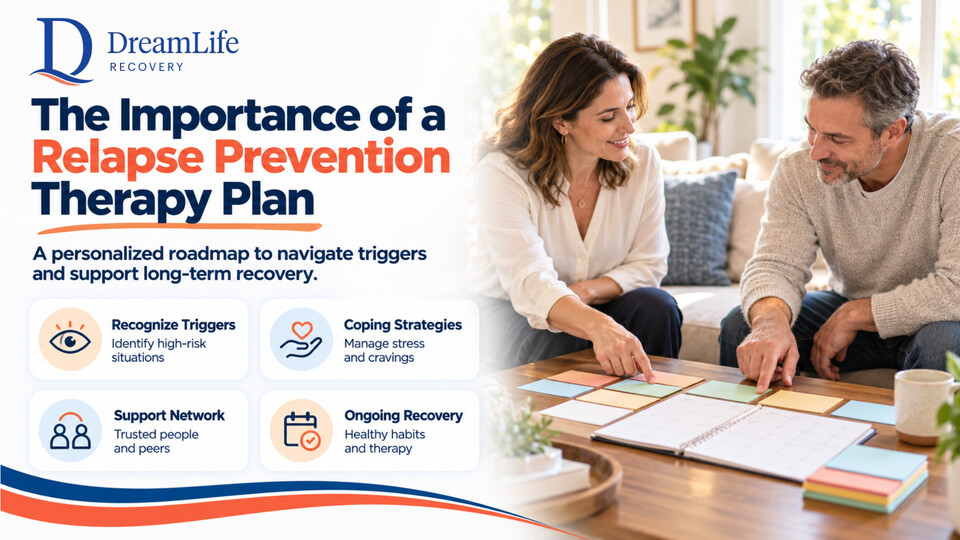
A written plan identifies personal triggers, lists specific coping strategies for each, names the people to call, sets out daily routines that support stability, and specifies what to do in the event of a lapse. It is a practical document to be used, not a theoretical exercise.
4. Does a relapse mean treatment failed?
No. Addiction is a chronic condition, and relapse rates are comparable to those for diabetes, asthma and hypertension. A relapse signals that the treatment plan needs adjusting, and what matters most is how quickly a person re-engages with support.
5. How long should relapse prevention work continue?
It is ongoing rather than a fixed course. At DreamLife Recovery the work begins during residential treatment and continues through individual and group therapy, alumni support and holistic practices, with the intensity reducing as a person’s recovery becomes more stable.