Empowering Your Future
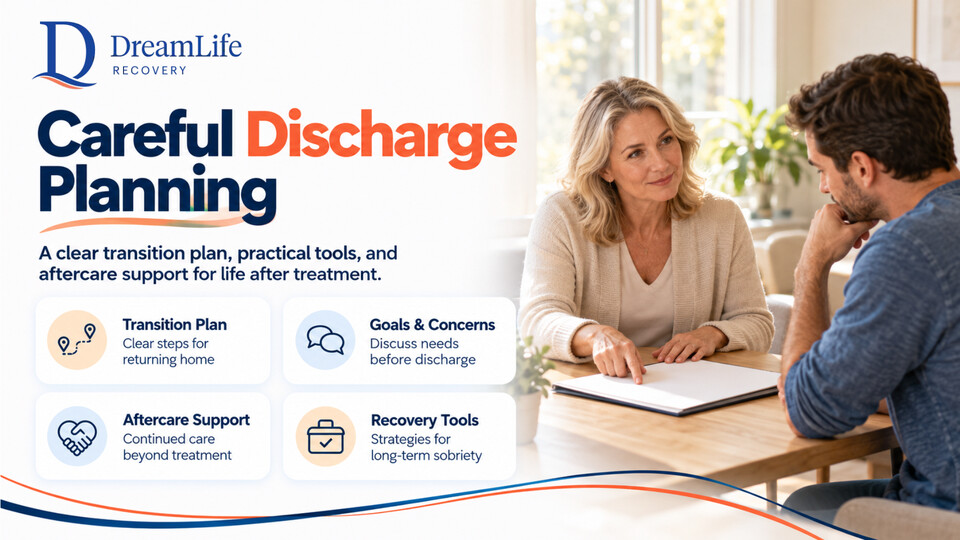
At DreamLife Recovery in Pennsylvania, we’re proud to introduce our Aftercare Program, a dynamic approach to support our clients not only during their treatment but also as they return to their daily lives. Our program begins with an initial assessment to identify each client’s treatment goals and address immediate concerns, followed by a detailed case management screening. This comprehensive process includes meetings with client liaisons and a personalized aftercare plan, ensuring a smooth transition from treatment to everyday life.
The highlight of our Aftercare Program is a six-week professional and personal development course, designed to equip participants with essential skills for both personal growth and professional success. This includes building a professional identity, learning workplace essentials, engaging in mock interviews with real HR professionals, and managing work-life balance. At DreamLife Recovery, we are committed to empowering our clients to not only recover but also to thrive in their personal and professional lives.

Get Your DreamLife
Recovery from alcohol and drug addiction is possible, for you or a loved one. We’re here to help.
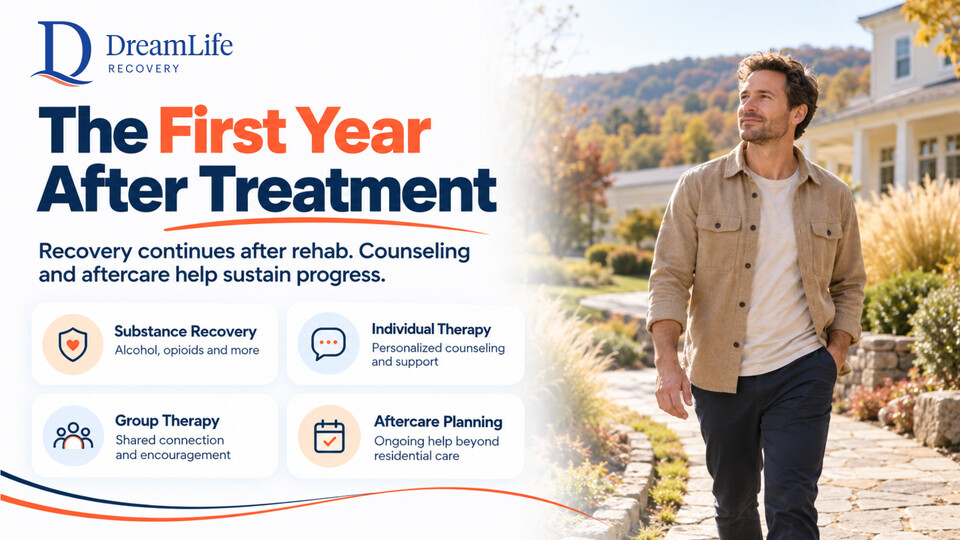
The First Year After Treatment
The first year of recovery after drug rehab will have challenges unique to each client. These challenges can strengthen a recovering individual’s resolve and dedication to a sober life or they can lead to a relapse and return to addictive behavior and drug use. Drug and alcohol counseling is a mainstay of post-residential treatment. Those that have made it this far during their drug and/or alcohol recovery need every type of support possible to sustain their progress.
DreamLife Recovery, our drug rehab center near Pittsburgh has a commitment to the long-term success of our clients that is accomplished, in part, by our drug and alcohol counseling services. Our robust aftercare plan embodies this dedication to ongoing help after rehab.
Rehab Programs and Therapies Available:
• Alcohol Abuse
• Opiate Abuse
• Heroin Abuse
• Xanax Abuse
• Amphetamine, Cocaine, Sedative & More Substance Abuse Programs
• Psychotherapy
• Group Therapy
• Individual Therapy
• Adventure Therapy
• And Many More Programs Crafted To Your Individual Situation
If you are interested in our Addiction Rehab & Aftercare Planning, give us a call or fill out our form. Our admission process starts with a verification of benefits to provide the most accurate cost estimate for your stay. We’ll then follow up with a medical screening over the phone before preparing your travel arrangements to our recovery center in Donegal, PA.
DreamLife Recovery Treatment Programs
DreamLife Recovery offers clients a variety of specialized treatment options during their stay at our facility in Donegal, Pennsylvania. These may range depending on the precise needs of the individual, delivered by our expertly trained and clinically accredited staff. Once admitted, clients are assessed toby our staff to determine which specific treatments can best help them handle substance abuse and addiction
Frequently Asked Questions
1. What is included in an aftercare plan?
A plan typically covers ongoing therapy, support group meetings, a sober living or housing arrangement, medication management where relevant, employment or education goals, and a written relapse prevention strategy with named contacts. DreamLife builds each plan from an initial assessment, a case management screening, and meetings with client liaisons.
2. When does aftercare planning begin?
It begins during treatment, not at discharge. Planning while a person is still in structured care means housing, therapy appointments, and support meetings are already arranged before they leave, which removes the gap where relapse most often happens.
3. How long does aftercare last?
Formal aftercare commonly runs through the first year after treatment, and DreamLife’s program includes a six-week course on personal and professional development covering workplace skills, mock interviews, and work-life balance. Informal support through the alumni network continues indefinitely.
4. Why is the first year after treatment the riskiest?
Relapse rates are highest in the first 90 days and remain elevated across the first year, because that is when a person is re-encountering old environments, relationships and stressors without the daily structure of treatment. Aftercare exists specifically to carry someone through that window.
5. What happens if someone relapses during aftercare?
A relapse is treated as information about what the plan missed, not as a failure that ends support. The response is to reassess, adjust the level of care which may mean a return to outpatient or residential treatment and strengthen the parts of the plan that did not hold.