Meth Addiction Treatment
Meth addiction can negatively impact your happiness, quality of life and overall health. The best way to treat your meth addiction is through personalized rehabilitation. At DreamLife Recovery, we prioritize every aspect of your treatment so you get the resources and support you need to stay sober.
We have seen how meth addiction can take hold of people, so we use trauma-informed, evidence-based strategies. With our team of professionals by your side, you can take back control of your life. Take the first step toward getting the help you need at our comprehensive meth treatment center.
Get Your DreamLife
Recovery from alcohol and drug addiction is possible, for you or a loved one. We’re here to help.
Get to Know DreamLife Recovery
Our rehab facility in western Pennsylvania allows you to enjoy the peaceful, natural setting while receiving treatment. We provide a safe, comfortable, and caring environment for your recovery. DreamLife Recovery offers a variety of options, which allows us to find a method of therapy that works best for you. We know every person is different, so we individualize each program to find the right fit for you to find success in recovery.
Frequently Asked Questions
1. What treats meth addiction?
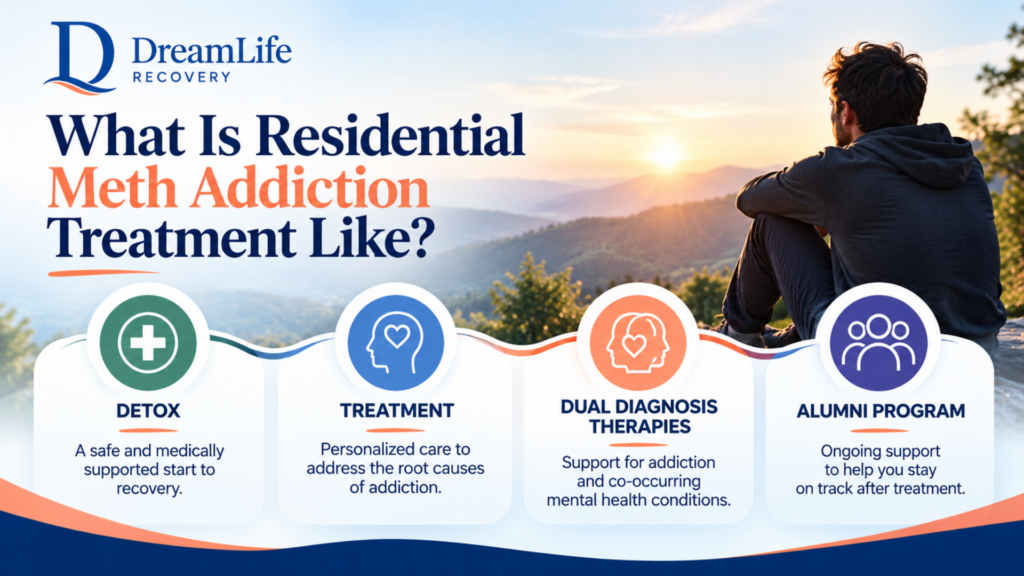
Behavioral therapy is the primary treatment, since no medication is FDA-approved for methamphetamine addiction. Effective programs combine supervised detox with residential or outpatient rehab built around cognitive behavioral therapy, contingency management, individual, group and family therapy, and trauma-focused work such as EMDR. Dual diagnosis care is often essential, because heavy meth use frequently leaves depression, anxiety or psychosis that has to be treated alongside the addiction.
2. What are the signs of meth addiction?
Common physical signs include dramatic weight loss, skin sores from picking, severe dental decay, and long stretches without sleep followed by extended crashes. Behavioral signs include paranoia, agitation, hallucinations, bursts of frantic energy, secrecy about money or whereabouts, and neglect of work, school and family responsibilities. Rising tolerance, strong cravings and continued use despite visible physical and relationship damage point to addiction rather than occasional use.
3. How long does meth withdrawal last?
The acute phase usually begins within 24 hours of the last dose and lasts about seven to ten days, starting with a crash of extreme fatigue, heavy sleep and increased appetite. Depression, anxiety, irritability, difficulty concentrating and powerful cravings often continue for several weeks afterward, and some people experience low mood for a few months as brain chemistry recovers. Meth withdrawal is rarely life-threatening, but the depression can be severe enough to require medical and psychiatric supervision.
4. What are the new treatments for meth addiction?
Research is testing medication combinations such as naltrexone paired with bupropion, which has shown modest benefit in clinical trials, but nothing is yet FDA-approved specifically for meth addiction. Contingency management, which provides structured incentives for verified abstinence, currently has the strongest evidence of any intervention for stimulant use disorder. In practice the most effective approach remains an extended, structured program combining behavioral therapy, dual diagnosis care and long-term aftercare.
5. How long does it take your body to recover from meth addiction?
Physical recovery begins within the first few weeks, as sleep, appetite and weight start to normalize once use stops. Brain recovery takes considerably longer: dopamine function and cognitive abilities such as memory and impulse control improve over months, with research suggesting meaningful recovery across roughly one to two years of sustained abstinence. Damage to teeth and skin may need separate medical and dental treatment, and staying in structured care through that first year makes lasting recovery far more likely.