Medication-Assisted Treatment (MAT) for Substance Abuse
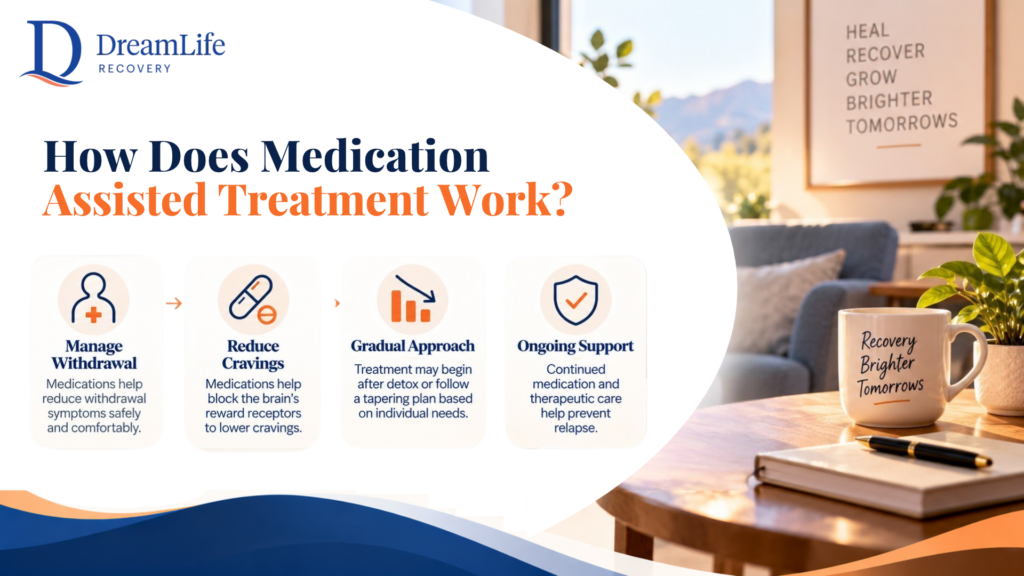
Medication-assisted treatment (MAT) uses a combination of medication and therapies to treat substance use disorders. Particularly designed for treating opioid use, it can also be used to treat alcohol use disorders.
Depending on how intense one’s addiction is, medication-assisted treatment may be the best way for an individual to endure painful withdrawal symptoms. Our team carefully assesses each client to decide whether MAT is the right fit for their recovery. This includes personal preferences, accessibility to MAT after rehab and the substance use disorder.
Therapy Programs and Substance Abuse Services Available:
- Alcohol Abuse
- Opiate Abuse
- Heroin Abuse
- Xanax Abuse
- Amphetamine, Cocaine, Sedative & More Substance Abuse Programs
- EMDR Therapy
- Group Therapy
- Individual Therapy
- Pyschotherapy
- And Many More Programs Crafted To Your Individual Situation
If you are interested in our medication-assisted treatment, give us a call or fill out our form. Our admission process starts with a verification of benefits to provide the most accurate cost estimate for your stay. We’ll then follow up with a medical screening over the phone before preparing your travel arrangements to our recovery center in Donegal, PA.
Get Your DreamLife
Recovery from alcohol and drug addiction is possible, for you or a loved one. We’re here to help.
Get to Know DreamLife Recovery
Our rehab facility in western Pennsylvania allows you to enjoy the peaceful, natural setting while receiving treatment. We provide a safe, comfortable, and caring environment for your recovery. DreamLife Recovery offers a variety of options, which allows us to find a method of therapy that works best for you. We know every person is different, so we individualize each program to find the right fit for you to find success in recovery.
Aftercare for Medically Assisted Treatment
Opioids
The U.S. Food & Drug Administration (FDA) has approved three medications in aftercare treatments to help enhance a person’s sobriety as well as reduce the likelihood of relapse. These medications include:
• Buprenorphine: This partial-agonist medication helps to block some of the opioid receptors in the brain. This medication can help to reduce cravings and relieve pain without creating the same “high” that can be experienced when using painkilling medications.
• Methadone: Methadone is a medication used to reduce painkiller and heroin abuse. The medication is a full-agonist medicine that can relieve pain. The medication is taken daily and is available in pill, liquid, and wafer forms. However, methadone must be prescribed via an opioid treatment program, which the Substance Abuse and Mental Health Services Administration regulates. Participants must be monitored regularly to ensure that excess methadone is not present in their systems and to ensure the person is continuing to pursue sobriety. Methadone maintenance therapies can take 12 months or more to be effective, according to The Pew Trust.
• Naltrexone: Naltrexone is a medication used to assist in the reduction of opioid abuse. It is an antagonist medication, meaning it blocks the effects of opioid receptors. If a person is on naltrexone and takes an opioid, they may not experience the “high” they usually would. Naltrexone is available as a pill formulation a person can take daily or as an extended-release injectable medication that is given monthly. People take naltrexone to reduce the likelihood they will relapse, but it does not assist in reducing withdrawal symptoms.
Alcohol Treatment
Medication-assisted treatments are available for those addicted to alcohol as well. These medications for alcoholism are usually intended to deter drinking by causing unpleasant side effects if a person does drink again after being sober. Examples of medicines used in medication-assisted treatment for alcohol abuse include:
• Acamprosate: Acamprosate is a medication used for those in recovery for alcohol dependency. Acamprosate is taken three times a day, in tablet form. It cannot be taken until a person has completed the detox phase. The medicine can take several days to a week to have the full effect on the body. Acamprosate prevents users from feeling the “high” when drinking by controlling the reward center of the brain. When this happens, there is no positive reinforcement to consume alcohol, which leads to fewer urges to drink.
• Disulfiram (Antabuse): As part of an alcoholism treatment program, this medication is available as a pill taken once every day. If a pill is taken and alcohol is drunk, unpleasant side effects include headache, nausea, and vomiting. These symptoms can occur within 10 minutes of drinking alcohol.
• Naltrexone: Naltrexone is used in medication-assisted treatment for both opioids and as part of an alcohol treatment plan. People who have suffered from alcohol abuse take it because it does not cause an intoxicated feeling when drinking after taking the medicine. As a result, a person is ideally less likely to turn to alcohol.
Dangers of Mixing Medications
A person who uses medication-assisted treatment should talk to their doctor about all their current medications. Some medications, especially those to treat opioid addiction, can cause fatal side effects when combined with medications like benzodiazepines, which are used to relieve anxiety, such as Xanax or Valium.
Frequently Asked Questions
1. What is medication-assisted treatment?
Medication-assisted treatment combines FDA-approved medication with counseling and behavioral therapy to treat substance use disorders. It is used primarily for opioid use disorder and also for alcohol use disorder. The medication controls withdrawal and cravings so a person is stable enough to engage in therapy, and the therapy addresses the causes of the addiction.
2. How does medication-assisted treatment work?
The medication occupies or blocks the brain receptors involved in addiction, which removes the constant pull of withdrawal and craving. For opioid use disorder DreamLife Recovery uses buprenorphine with naloxone (Suboxone), methadone or naltrexone; for alcohol use disorder it may use acamprosate, naltrexone or disulfiram. Alongside this, psychotherapy, EMDR, and individual and group therapy do the work of changing the patterns that sustain addiction.
3. Is MAT just swapping one drug for another?
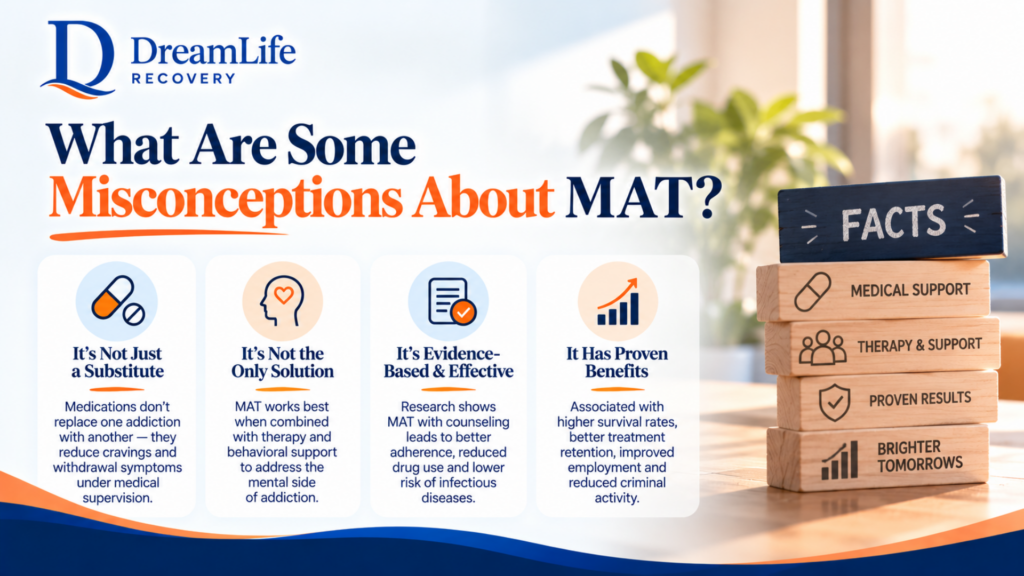
No, and this is the most common misconception about it. MAT medications are prescribed at controlled doses that prevent withdrawal and cravings without producing a high, which lets a person work, maintain relationships and participate in therapy. Decades of research show MAT reduces relapse, overdose deaths and transmission of infectious disease compared with treatment without medication.
4. Is therapy required with MAT?
Yes. Medication alone addresses the physical side of addiction but not the behavioral patterns, trauma or mental health conditions underneath it. DreamLife Recovery treats psychotherapy and behavioral therapy as essential components of MAT, and pairs medication with individual, group and family therapy, EMDR and dual diagnosis care. Programs that provide medication without therapy produce measurably worse outcomes.
5. How long does someone stay on MAT?
There is no fixed length, and it should be a clinical decision rather than a deadline. Methadone maintenance often takes 12 months or more to be fully effective, and many people remain on buprenorphine or methadone for years, which is safe and associated with the best outcomes. Some people taper off with medical supervision once they are stable in recovery, while others stay on medication long term as they would for any chronic condition.