Suboxone Rehab Treatment
Medication-Assisted Treatment (MAT) helps patients through recovery responsibly and effectively. At DreamLife Recovery, we offer MAT with a medicine called Suboxone. With Suboxone, patients can reduce their cravings and safely detox. When you begin your recovery with Suboxone, you can prevent future relapse and build healthy habits.
What Is Suboxone?
Suboxone is a medical substance that works to block the effects of opioids and addiction. With Suboxone, patients can begin rehab by easing their bodies from physical dependence. Suboxone’s main ingredients – buprenorphine and naloxone work together to reduce cravings and withdrawal symptoms.
Suboxone rehab has helped our patients overcome opiate addiction with excellent success. Suboxone prevents opioid effects by filling “intoxicated” brain receptors with a limited “high.” The medication is difficult to abuse because users can not overdose, which helps ease patients out of their cravings.
Suboxone in MAT Treatment
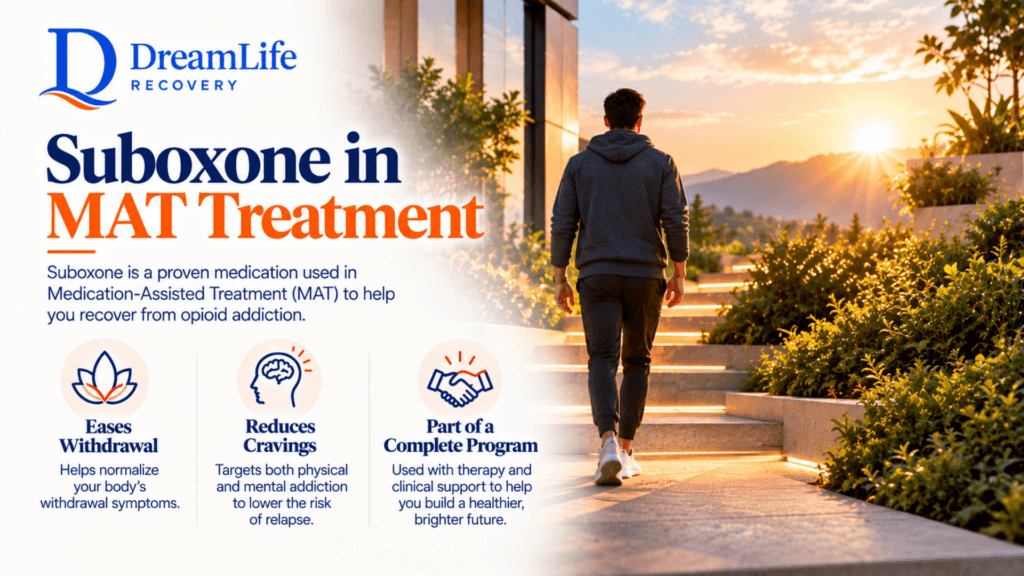
Our MAT program uses all the tools at our disposal to help you recover from opiate addiction. Suboxone rehab treatment reduces physical and mental addiction through medication and therapy approaches. Suboxone is one step, and its effects can make the rest of the process much easier.
Through our inpatient Suboxone treatment center, you can normalize your body’s withdrawal. The medication reduces your chances of relapse and alleviates detox discomfort. With Suboxone, we aid your recovery through proven clinical methods and get you started on your lifelong journey to sobriety.
Why Choose Suboxone Rehab Treatment?
Suboxone is one of many medications that can be used for addiction detox. DreamLife Recovery is a Suboxone rehab facility because we have seen the good it can do. This medication has helped rehab centers combat the opioid epidemic and saved countless lives.
With Suboxone treatment, patients experience a new form of assisted recovery. Here are some of the benefits of a Suboxone MAT program:
- Normalizes withdrawal: Suboxone’s main ingredient, buprenorphine, creates a limited high so patients can ease through withdrawal. With this medication, patients can have a painless detox and achieve the same results. Plus, the drug has a threshold, so any dose taken after the recommended amount will be ineffective.
- Treats physical cravings: Naloxone – Suboxone’s second ingredient – is an opiate blocker. Patients will not feel the opioid effect, reducing their physical craving for opioid highs.
- Low risk of dependency: Scientists created Suboxone to prevent and treat addiction. Suboxone is nonhabit-forming, so patients can progress through treatment without drug dependence. Its side effects are mild and help patients distance themselves from opiates.
- Lessens the risk of relapse: Because Suboxone maintains and blocks the opioid effect, patients can reduce their chance of relapse. With the right medication, you can reduce the cravings that lead back to opiates or accidental overdose.
- Improves treatment retention: Patients see and feel results with MAT programs. Suboxone can assist with step one of a lifelong process to recovery. With the right tools to begin rehab, you can see yourself progress throughout your treatment.
Our MAT Suboxone Program
At DreamLife Recovery, Suboxone treatment is one small aspect of a larger program. We prescribe Suboxone to address the cravings and withdrawal you may experience throughout detox. For the rest of your treatment, we use a multidisciplinary approach to your mental and physical wellness.
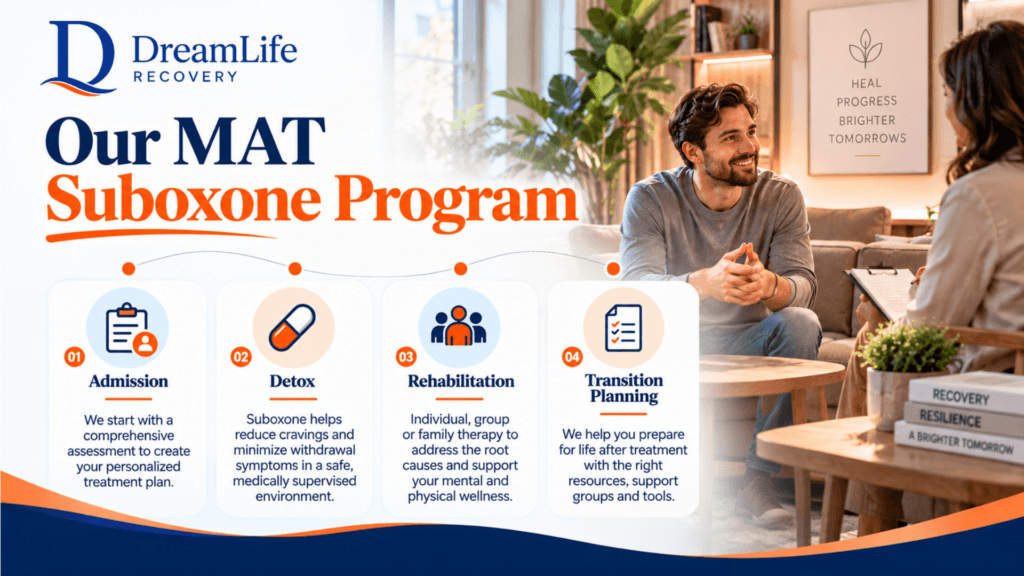
Here’s where Suboxone fits into your inpatient Medication-Assisted Treatment:
- Admission: The most important step you will take toward recovery is admission. Once you recognize the problem, we begin planning your individualized program to provide the help you need.
- Detox: This is where Suboxone fits into the program. Throughout your detox, you may experience cravings, which Suboxone can help minimize.
- Rehabilitation: Your rehab treatment will comprise the bulk of your stay. Through group, individual or family therapy, you will talk with counselors about how addiction has affected your life. Some patients will also address co-occurring disorders with our medical team.
- Transition planning: Preparing for your treatment to end is a crucial step to take before you leave. We help you move through your transition with the best resources, support groups and tools so you can enjoy your sober life.
- Aftercare: We are committed to your long-term recovery, and we offer a robust aftercare program. You will have our support for years after treatment so you can sustain your sobriety.
Get Started at DreamLife Recovery for Your Suboxone MAT Program
At DreamLife Recovery, we facilitate effective and responsible addiction treatment for you and your loved ones. Our team of professional therapists and doctors works with you so you can enjoy life to its fullest again. Though we know rehab is not easy, we’re here to remind you that recovery is possible.
Reach out to our team here and discuss Suboxone treatment options to begin your dream life. If you’re interested in our other treatment options, you can explore our recovery programs, and if you have any questions, you can also get in touch with us online.
Frequently Asked Questions
1. What is Suboxone?
Suboxone is a prescription medication for opioid use disorder that combines two ingredients: buprenorphine and naloxone. Buprenorphine is a partial opioid agonist that occupies opioid receptors enough to stop withdrawal and cravings while producing only a limited effect, and naloxone is an opioid blocker included to discourage misuse. Together they reduce cravings and withdrawal so a person can focus on treatment.
2. How is Suboxone different from methadone?
Buprenorphine is a partial agonist with a ceiling effect, meaning its effects level off above a certain dose, while methadone is a full agonist with no such ceiling. That makes Suboxone generally safer in overdose terms and allows it to be prescribed in office-based settings, whereas methadone is dispensed through federally regulated clinics. Methadone is often the better option for people with very high tolerance or long-standing heavy use, and the choice between them is a clinical decision made after assessment.
3. When is Suboxone started during treatment?
Suboxone is typically started once withdrawal has already begun, not while opioids are still active in the system. Starting it too early can trigger precipitated withdrawal, which comes on suddenly and is severe. At DreamLife Recovery the medical team times the first dose during detox based on the specific opioid used, the last dose and the person’s symptoms.
4. Can you overdose on or misuse Suboxone?
Buprenorphine’s ceiling effect makes overdose considerably less likely than with full opioid agonists, and the naloxone component discourages injection misuse, but neither makes it impossible. Overdose risk rises significantly when Suboxone is combined with benzodiazepines such as Xanax or Valium, with alcohol or with other sedatives. This is why it must be taken exactly as prescribed and why all other medications should be disclosed to the prescribing physician.
5. What are the side effects of Suboxone?
Side effects are generally mild and often ease as the body adjusts. The most common are headache, nausea, constipation, sweating, insomnia and numbness or soreness in the mouth from the film dissolving. Taking more than the prescribed dose does not increase the benefit because of the ceiling effect, and any troublesome side effects should be reported to the prescribing physician rather than managed by adjusting the dose independently.