Cocaine Addiction Treatment
What begins as a social drug can quickly become a serious cocaine addiction. Though users find that cocaine can inspire feelings of euphoria and confidence, the high is short-lived. You may need addiction treatment to address the reality of drug dependence. If you’re experiencing cocaine addiction, you can find the resources and support you need at DreamLife Recovery.
Our team combines evidence-based treatment with personalized therapy to help you find your way out of addiction. We help you discover a community of people like you, all under the same roof. Experience compassionate, expert cocaine addiction rehabilitation when you begin our 12-step program.
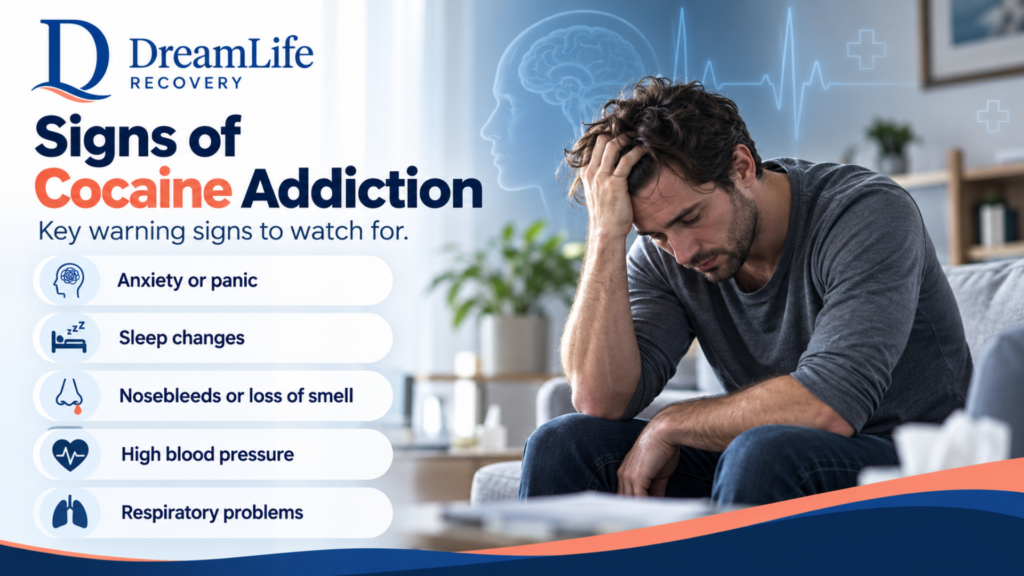
Signs of Cocaine Addiction
The short-term effects of cocaine are what make it a popular party drug. However, the short dopamine rush can turn into feelings of anger, restlessness or paranoia. Below are common signs of cocaine addiction:
• High blood pressure
• Anxiety or panic
• Nausea
• Sleep pattern changes
• Mania
• Headaches
• Long-term heart disease
• Seizures
• Bowel decay
• Respiratory problems
• Nosebleeds or loss of smell (from snorting)
Get to Know DreamLife Recovery
Our rehab facility in western Pennsylvania allows you to enjoy the peaceful, natural setting while receiving treatment. We provide a safe, comfortable, and caring environment for your recovery. DreamLife Recovery offers a variety of options, which allows us to find a method of therapy that works best for you. We know every person is different, so we individualize each program to find the right fit for you to find success in recovery.
Frequently Asked Questions
1. What is the treatment for cocaine abuse?
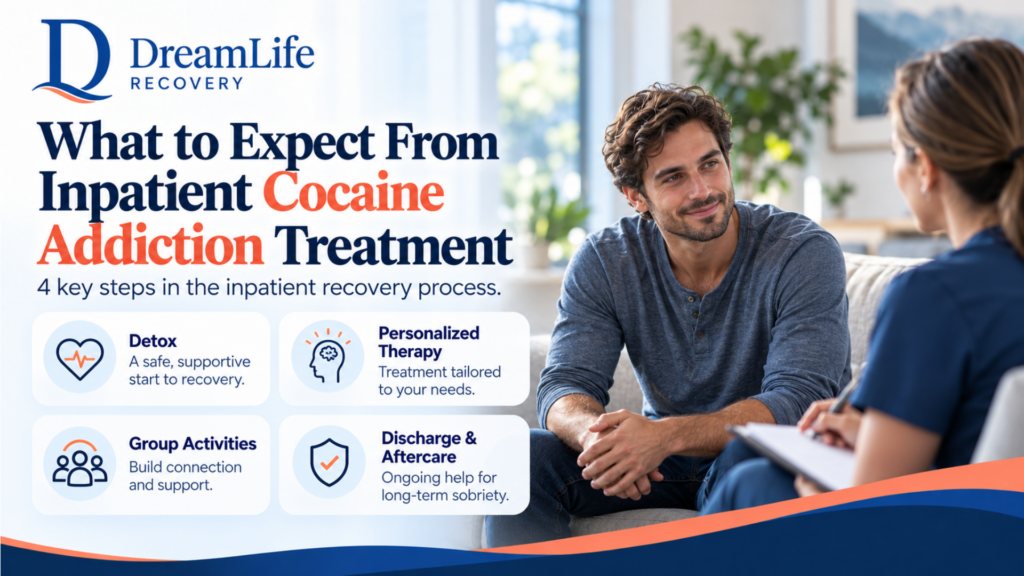
There is no FDA-approved medication for cocaine addiction, so treatment centers on behavioral therapy delivered inside a structured program. That typically starts with a supervised detox to get through the crash safely, then residential or outpatient rehab built around cognitive behavioral therapy, individual, group and family therapy, EMDR and trauma work. Medication may still be used to manage specific symptoms such as depression, agitation or insomnia, and dual diagnosis care treats any underlying mental health condition driving the use.
2. What medicine is used to treat cocaine addiction?
No medication is currently FDA-approved to treat cocaine addiction itself. Doctors do prescribe medications to manage the symptoms that accompany withdrawal and early recovery, including antidepressants for low mood, sleep aids for insomnia, and medication for anxiety or agitation. Research into options such as modafinil and topiramate is ongoing but none is yet approved for this use, so structured behavioral therapy remains the core of effective treatment.
3. When does cocaine withdrawal peak?
Cocaine withdrawal usually begins within hours of the last dose with a crash of exhaustion, heavy hunger and depressed mood. Symptoms generally peak within the first one to three days and ease over roughly one to two weeks, though cravings, low mood, poor sleep and difficulty feeling pleasure can persist for several weeks or months. Cocaine withdrawal is rarely physically dangerous, but the depression and intense cravings make it a high-risk period for relapse, which is why supervised detox matters.
4. How long do people go to rehab for cocaine?
Most people complete a residential program of about 30 days after detox, then continue in a partial hospitalization program and intensive outpatient care for several more weeks. A full course of treatment commonly runs 60 to 90 days across those levels of care. The right length depends on how long and how heavily cocaine was used, whether other substances are involved, and whether a co-occurring mental health condition needs treatment at the same time.
5. How successful is rehab for cocaine addiction?
Cocaine addiction is treatable, but like other substance use disorders it is chronic, and relapse during the first year is common rather than a sign of failure. Outcomes improve substantially with longer time in treatment, consistent behavioral therapy, treatment of any co-occurring mental health condition, and a structured aftercare plan. People who complete the full continuum of care and stay engaged with aftercare, sober living and alumni support do significantly better than those who stop after detox.