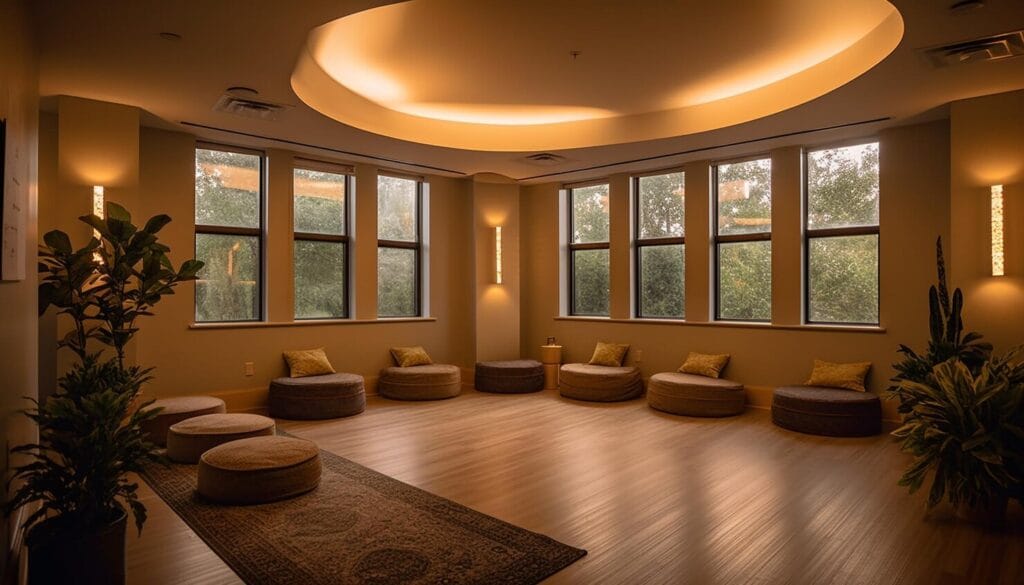
Looking at luxury rehab centers can sometimes feel more like comparing resorts than healthcare programs. Private rooms, chef-prepared meals and peaceful surroundings may look appealing, but they leave an important question: Does “luxury” describe the treatment, the environment or both?
Luxury rehab generally combines residential addiction treatment with greater privacy, comfort, individualized services and premium amenities. What separates good treatment from attractive accommodation, however, is the clinical foundation. Licensing, qualified professionals, appropriate assessment, evidence-based treatment, individualized planning and continuing care matter more than the view from the bedroom.
What Is Luxury Rehab?
Luxury addiction treatment generally refers to residential treatment provided in a more private, comfortable or amenity-rich environment than conventional inpatient treatment.
Some upscale rehab centers may offer private bedrooms, enhanced meal options, fitness facilities, secluded surroundings, wellness activities, executive accommodations or concierge-style services.
Those features can affect the treatment experience, but they do not by themselves establish clinical quality.
SAMHSA recommends evaluating treatment programs based on factors such as licensing and accreditation, evidence-based care, appropriate medication treatment, family involvement and support that addresses a person’s broader recovery needs. SAMHSA’s quality-treatment guidance
That distinction is central when considering private luxury rehab:
Comfort can support the experience of treatment. Clinical care treats the substance use disorder.
What Do Luxury Rehab Centers Usually Include?
Amenities vary considerably between programs. A useful way to evaluate a center is to separate what is clinically important from what is primarily intended to increase comfort.
| Feature | Why It May Matter | Category |
| Clinical assessment | Identifies substance use, medical, psychiatric and social needs before treatment is planned | Core clinical care |
| Individualized treatment planning | People differ in substance use, severity, mental health, medical history and recovery needs | Core clinical care |
| Withdrawal management | Some people require medical monitoring while substances leave the body | Core clinical care |
| Behavioral therapy | Helps address behaviors, coping patterns, triggers and other factors related to substance use | Core clinical care |
| Co-occurring disorder treatment | Mental health and substance use conditions may need coordinated treatment | Core clinical care |
| Appropriate medications | Certain substance use disorders have effective FDA-approved medication options | Core clinical care |
| Family involvement | Can help families understand treatment and build healthier support systems when appropriate | Clinical/supportive |
| Discharge and continuing-care planning | Recovery continues after residential treatment ends | Core clinical care |
| Yoga, mindfulness or fitness | May support wellness, routine or stress management | Complementary |
| Private rooms | May improve personal space, rest and discretion | Luxury/comfort |
| Premium meals | May improve comfort and the residential experience | Luxury/comfort |
| Scenic grounds or recreation | May create a more comfortable residential environment | Luxury/comfort |
| Spa-style services | Primarily an amenity unless part of a defined clinical plan | Luxury/comfort |
| Executive workspace | May be useful for professionals managing limited work obligations | Luxury/functional |
NIDA’s treatment principles emphasize why the clinical side deserves greater weight: no single treatment is appropriate for everyone, treatment should address multiple needs, plans should be reassessed as needs change, and behavioral therapies and medications can both have important roles. NIDA’s Principles of Drug Addiction Treatment
Clinical Care Should Be the Foundation of Luxury Addiction Treatment
A high-end environment cannot compensate for weak clinical care.
Before comparing bedrooms, menus or recreation, ask what happens clinically from admission through discharge.
Individualized Assessment and Treatment
Substance use disorders do not look identical from one person to another.
The substance involved, severity of use, previous treatment, physical health, mental health, medications, family situation and living environment can all affect what type of care makes sense.
That is why individualized planning matters. NIDA identifies matching treatment settings and services to the individual’s particular problems and needs as an important principle of effective addiction treatment.
Evidence-Based Behavioral Therapy
Quality treatment may include approaches such as cognitive behavioral therapy, motivational approaches, individual counseling, group treatment or other evidence-supported interventions appropriate to the person’s needs.
SAMHSA specifically includes evidence-based approaches such as CBT and motivational interviewing among indicators consumers can look for when evaluating treatment.
The therapy itself matters more than whether it takes place beside a mountain, swimming pool or landscaped garden.
Medical and Psychiatric Support
Some people entering residential treatment need more medical or psychiatric support than others.
The important question is therefore not simply, “Does this center have medical staff?” but:
- Who assesses the person before admission?
- What medical coverage is available?
- Can the facility safely manage the expected level of withdrawal?
- How are medications handled?
- Is psychiatric assessment available when necessary?
- What happens if someone’s medical or psychiatric needs exceed the facility’s capabilities?
Dual-Diagnosis and Co-Occurring Disorder Care
Substance use and mental health conditions can occur together.
SAMHSA recommends integrated approaches because coordinated mental-health and substance-use treatment can provide a more complete approach to the person’s needs. SAMHSA guidance on co-occurring disorders
This is why someone experiencing addiction alongside depression, anxiety, trauma symptoms or another mental health condition should ask how the program evaluates and treats both, rather than assuming that every luxury facility offers meaningful dual-diagnosis care.
What Amenities Do High-End Rehab Centers Offer?
Amenities are the most visible part of high end rehab centers, but they vary significantly.
Depending on the facility, these may include:
- Private or semi-private bedrooms
- Higher-end furnishings
- Chef-prepared or customized meals
- Fitness facilities
- Yoga or meditation spaces
- Massage or spa-style services
- Outdoor recreation
- Pools or hydrotherapy facilities
- Quiet or scenic surroundings
- Private work areas
- Executive-focused accommodations
- Concierge-style assistance
These features may make treatment feel more comfortable or private.
That can matter practically. Someone who is sleeping well, feels secure and has enough personal space may find a residential stay easier to tolerate than someone who feels continually uncomfortable.
But that reasoning should not be stretched into a guarantee of better treatment outcomes. Established addiction-treatment guidance focuses far more heavily on appropriate care, individualized services, qualified treatment, evidence-based methods and adequate continuity of support than on hospitality amenities.
Luxury Drug Rehab Centers May Need Different Clinical Capabilities
The phrase luxury drug rehab centers covers many different substance use disorders.
That matters because treatment needs can vary considerably by substance.
For example, the FDA identifies buprenorphine, methadone and naltrexone as approved medications for opioid use disorder. A person with opioid use disorder should therefore ask whether medication treatment is available when clinically appropriate rather than choosing a center based primarily on amenities. FDA information on medications for opioid use disorder
Someone using multiple substances may require another level of assessment because interactions, withdrawal risks and treatment needs can become more complicated.
Luxury Alcohol Rehab Centers and Withdrawal Safety
When comparing luxury alcohol rehab centers, medical capability deserves particular attention.
Alcohol withdrawal can become severe or complicated for some people. ASAM’s alcohol-withdrawal guideline recommends assessing risk factors and determining whether a person is at risk of severe or complicated withdrawal rather than treating withdrawal as a one-size-fits-all process. ASAM Alcohol Withdrawal Management Guideline
Alcohol withdrawal management is also not the same thing as treating alcohol use disorder. ASAM describes withdrawal management as one part of initiating and engaging someone in continuing treatment.
The same safety principle applies to benzodiazepines. Current ASAM-led guidance states that people who are likely to be physically dependent on benzodiazepines should not abruptly discontinue them because withdrawal can become serious and potentially life-threatening. ASAM Benzodiazepine Tapering Guideline
If you or someone you care about may be experiencing severe withdrawal, overdose symptoms or another medical emergency, call 911 or seek emergency medical care rather than trying to manage the situation alone.
Luxury Rehab vs Standard Rehab
The clinical fundamentals of good addiction treatment should not disappear simply because one program costs more than another.
| Standard Residential Treatment | Luxury or Upscale Residential Treatment |
| Residential addiction treatment | Residential addiction treatment |
| Clinical assessment | Clinical assessment should still be present |
| Behavioral treatment | Evidence-based therapy should still be present |
| Medical support depending on level of care | Medical support depending on level of care |
| Shared or standard accommodation may be common | Private or upgraded accommodation may be available |
| Standard meal and recreation options | Premium meals, fitness or recreational options may be available |
| Less emphasis on hospitality | Greater emphasis on privacy, setting and comfort |
| May serve larger groups | Some upscale programs may operate in smaller environments |
| Usually fewer executive-oriented conveniences | May include workspaces or professional accommodations |
The important point is what the table does not say:
Luxury does not automatically mean clinically superior.
A private suite may improve comfort and discretion, but treatment quality depends more directly on whether the program provides an appropriate assessment, qualified professionals, evidence-based treatment, medical care when needed and a realistic plan for what happens after discharge.
Is Luxury Rehab Better Than Standard Rehab?
Not automatically.
There is no good basis for assuming that spending more money on hotel-style amenities produces better recovery outcomes.
What can make a meaningful difference is what sometimes accompanies higher-end treatment: greater privacy, more individualized attention, access to appropriate specialists or an environment a particular person is more willing to remain in.
Those characteristics should be evaluated individually rather than inferred from the word “luxury.”
A well-run standard treatment program that matches a person’s clinical needs can be more appropriate than an expensive center whose clinical capabilities do not.
The practical question is therefore not:
“Which rehab is the most luxurious?”
It is:
“Which program can safely and appropriately treat this person’s specific needs?”
Why Privacy May Matter in Private Luxury Rehab?
Privacy is one reason some people look specifically for private luxury rehab.
Executives, business owners, healthcare professionals and other public-facing people may worry about treatment becoming known professionally or socially.
Privacy can reduce one barrier to seeking treatment because the person may feel more comfortable discussing sensitive experiences in a discreet environment.
But ask specifically what privacy means at the facility.
Useful questions include:
- Are bedrooms private?
- How many people are treated at once?
- Who can access clinical records?
- How are visitors handled?
- What are the facility’s phone and technology policies?
- How does the center handle professional obligations?
- What confidentiality rules and facility policies apply?
Do not assume the word “private” promises complete anonymity.
What Should You Look for in a Luxury Rehab Center?
Use clinical questions first and amenity questions second.
1. Appropriate Licensing and Accreditation
Licensing establishes whether a provider is authorized to deliver the services it offers. Accreditation provides another external review of organizational standards.
SAMHSA recommends checking licensing and accreditation when comparing programs.
2. Qualified Clinical Professionals
Ask who will actually provide treatment.
Look beyond a page that says “expert team.” Ask about physicians, nurses, therapists, counselors, and psychiatric professionals as relevant to your needs.
Why it matters: sophisticated facilities cannot compensate for a treatment team that lacks the qualifications required for the person’s condition.
3. A Thorough Admissions Assessment
Treatment recommendations should follow assessment rather than the other way around.
Why it matters: a person experiencing opioid use disorder, severe alcohol withdrawal risk, trauma, bipolar disorder or multiple substance use may require very different treatment resources.
4. Evidence-Based Treatment Options
Ask which therapies are used and why they are recommended for your situation.
A long menu of treatments is less meaningful than a clear explanation of how the program selects and integrates them.
5. Treatment for Co-Occurring Disorders
If mental health symptoms are present, ask whether the same treatment team can assess and coordinate both conditions.
Why it matters: treating substance use while ignoring an important co-occurring mental health condition can leave significant needs unaddressed. SAMHSA specifically supports integrated treatment for co-occurring disorders.
6. Medication When Clinically Appropriate
Ask whether the center supports evidence-based medication treatment rather than assuming all recovery should be medication-free.
This is particularly important for opioid use disorder, for which the FDA recognizes three approved medications.
7. Individualized Treatment Planning
Ask how treatment changes when someone’s needs change.
Why it matters: treatment is not static. NIDA recommends ongoing assessment and modification of the treatment plan when necessary.
8. Discharge and Continuing-Care Planning
Ask what happens before the person leaves residential treatment.
A useful discharge process should consider continuing therapy, medications where appropriate, recovery support, living environment, mental health needs and the next appropriate level of care.
Why it matters: residential treatment is one phase of recovery rather than an isolated event.
9. Transparent Costs
Request a clear explanation of:
- What the quoted rate includes
- Which clinical services cost extra
- What amenities cost extra
- Medication-related expenses
- Professional or psychiatric fees
- Transportation costs
- Insurance billing
- Expected out-of-pocket costs
Luxury treatment costs vary too much by program, level of care, location and services to assume that one advertised number represents the final cost.
10. Amenities That Match the Person Rather Than the Marketing
Once the clinical questions are answered, compare private rooms, meals, fitness options, outdoor areas and other comfort features.
At that point, luxury becomes a preference rather than a substitute for treatment quality.
Cost and Insurance for Luxury Addiction Treatment
The cost of luxury addiction treatment centers can vary widely according to:
- Level of care
- Length of treatment
- Location
- Staffing
- Medical and psychiatric needs
- Accommodation
- Additional services
- Amenities
Insurance coverage is a separate issue.
Coverage generally depends on the person’s insurance policy, network status, medical necessity, authorized level of care and covered clinical services. Premium accommodation or hospitality upgrades should not be assumed to be covered simply because clinical treatment is covered.
Before admission, ask both the facility and insurer for an explanation of benefits and likely out-of-pocket responsibility.
How DreamLife Recovery Fits Into the Treatment-Quality Conversation?
For readers evaluating residential treatment rather than luxury branding alone, DreamLife Recovery’s live website currently verifies several clinically relevant features.
Its residential treatment program describes individualized planning, 24/7 medical and clinical supervision, residential care and treatment for co-occurring mental health conditions.
DreamLife also has verified pages for:
- dual-diagnosis treatment
- cognitive behavioral therapy
- medication-assisted treatment
- family therapy
- aftercare planning
- an executive treatment program designed around professional needs and confidentiality
- a virtual facility tour showing private beds, lounge areas and gym access
- an insurance information and verification page.
DreamLife Recovery’s accreditation is also independently listed by The Joint Commission for behavioral health care and human services at its Donegal, Pennsylvania location. Verify DreamLife Recovery through The Joint Commission
Rather than judging a program by the word “luxury,” compare those verified clinical capabilities with your or your loved one’s actual treatment needs.
When Medical Needs Should Take Priority Over Amenities?
Some situations require particularly careful medical assessment.
That can include people experiencing or at risk for:
- Severe alcohol withdrawal
- Benzodiazepine withdrawal
- Opioid withdrawal or overdose risk
- Polysubstance use
- Serious medical conditions
- Medication complications
- Severe psychiatric symptoms
- Suicidal thoughts or self-harm risk
- Pregnancy with substance use
- Significant co-occurring mental health conditions
In these situations, choose the appropriate clinical level of care first.
A private bedroom, fitness center or gourmet menu cannot replace medical monitoring or psychiatric care when either is clinically necessary.
For an overdose, severe withdrawal, immediate danger or another medical emergency, call 911 or seek emergency care.
If someone in the United States is experiencing suicidal thoughts or another emotional or behavioral-health crisis, call or text 988 for the 988 Suicide & Crisis Lifeline. 988 Suicide & Crisis Lifeline
Conclusion
Luxury rehab centers can provide greater privacy, comfort and premium amenities, but those features should remain secondary to clinical quality. The right program is the one that can safely address the person’s substance use, mental and physical health needs with qualified professionals, an appropriate level of care, individualized treatment, and a realistic continuing-care plan. If you are comparing treatment options, you can review DreamLife Recovery’s verified admissions process and speak with its admissions team about whether its available services match your needs.
FAQs
What is considered a luxury rehab?
A luxury rehab is generally a residential addiction-treatment program that combines clinical care with greater privacy, comfort and premium amenities. The term itself does not guarantee better medical or behavioral-health treatment.
What do luxury rehab centers include?
Depending on the facility, they may include individualized treatment, therapy, medical or psychiatric services, private rooms, upgraded meals, fitness facilities, wellness activities and enhanced privacy. Always confirm the clinical services separately because amenities vary significantly between programs.
Are luxury rehab centers better than standard rehab?
Not necessarily. A higher price or more comfortable setting does not automatically mean better clinical care; treatment quality depends more directly on appropriate assessment, qualified professionals, evidence-based treatment, safety and continuing-care planning.
How much does luxury rehab cost?
There is no single reliable price because costs differ according to location, treatment intensity, length of stay, medical needs, staffing, accommodation and amenities. Request a written explanation of what is included and what may be billed separately before admission.
Does insurance cover luxury rehab?
Insurance may cover eligible addiction-treatment services when the policy’s requirements are met, but coverage varies by plan, network status, medical necessity and level of care. Do not assume premium accommodation or nonclinical amenities will be covered.
Are private luxury rehab centers more confidential?
They may provide greater physical privacy through smaller environments or private accommodation, but “private” does not mean completely anonymous. Ask the program directly about confidentiality procedures, records access, visitors, technology and communication policies.
How do I choose between two high-end rehab centers?
Compare the clinical programs before comparing amenities. Look at licensing and accreditation, assessment procedures, staff qualifications, medical capabilities, evidence-based treatment, co-occurring care, medication options when appropriate, discharge planning, cost transparency and whether the program fits the person’s actual needs.