At DreamLife Recovery, we understand that transitioning from a structured addiction treatment program to independent living can be a significant challenge. Many individuals need additional support to maintain their sobriety and navigate the complexities of everyday life. As part of our comprehensive addiction recovery programs in PA, our sober living program helps clients build a solid foundation for long-term recovery.
Get Your DreamLife
Recovery from alcohol and drug addiction is possible, for you or a loved one. We’re here to help.
Key Features of the Sober Living Program
DreamLife Recovery’s sober living treatment centers in Donegal, PA, offer a range of features designed to support clients as they transition from treatment to independent living. Our program emphasizes personal responsibility, community support, and continued growth, helping clients build a strong foundation for long-term success.
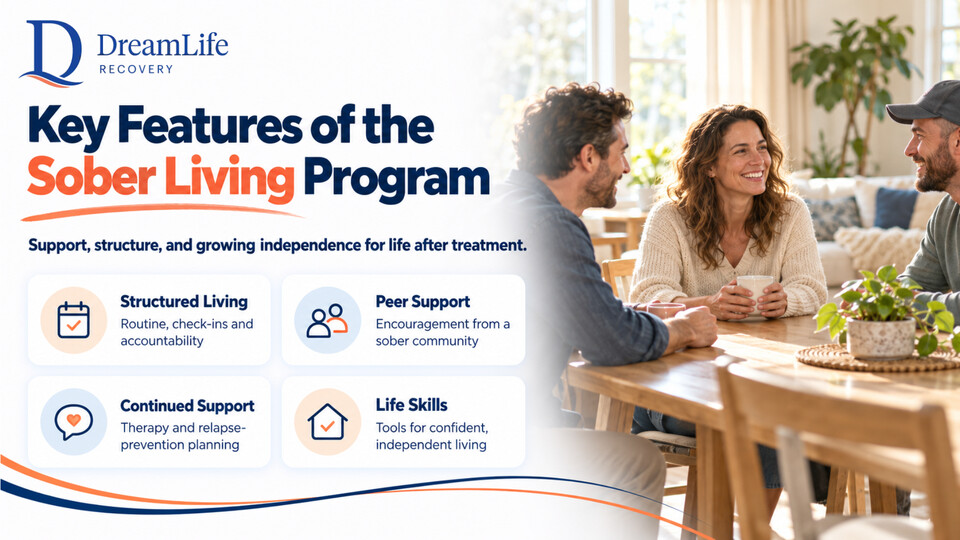
Key features of our sober living program include:
Structured living environment – Our sober living program provides structure and accountability to help clients maintain their focus on recovery.
• Peer support – Residents live with others who are also committed to sobriety, creating a supportive community that fosters mutual encouragement.
• Ongoing therapy and support – Clients continue participating in therapy and counseling sessions to address ongoing challenges and reinforce coping strategies.
• Life skills training – We offer life skills training to help clients develop the tools they need to manage responsibilities, maintain employment, and build healthy relationships.
• Relapse prevention planning – Our program includes relapse prevention planning to help clients identify triggers, manage stress, and develop strategies to stay sober in everyday life.
• Independence with accountability – While clients have the freedom to manage their daily routines, they are also held accountable through regular check-ins, curfews, and house meetings.
These features are designed to provide the right balance of support and independence, helping clients successfully navigate the transition to sober living and build the confidence they need to maintain sobriety in the long term.
DreamLife Recovery Treatment Programs
DreamLife Recovery offers clients a variety of specialized treatment options during their stay at our facility in Donegal, Pennsylvania. These may range depending on the precise needs of the individual, delivered by our expertly trained and clinically accredited staff. Once admitted, clients are assessed toby our staff to determine which specific treatments can best help them handle substance abuse and addiction
Frequently Asked Questions
1. How long do people stay in sober living?
Most residents stay between three and twelve months, and longer stays are consistently linked to better outcomes. There is no fixed discharge date people move on when they have stable work, savings and a reliable recovery routine.
2. What are the rules in a sober living home?
Residents stay substance-free and submit to testing, observe curfews, attend house meetings and check-ins, and contribute to chores. DreamLife Recovery’s home in Donegal, PA keeps residents responsible for their own routines while holding them accountable through that structure.
3. Is sober living the same as a halfway house?
They overlap but are not identical. Halfway houses are often tied to the criminal justice system with fixed time limits and mandated stays, while sober living is voluntary, privately funded, and open-ended.
4. Do you pay to live in a sober living home?
Yes, residents typically pay rent, which is one reason the model works: paying your own way rebuilds financial responsibility. Rent is usually separate from treatment billing, so insurance that covers clinical care often won’t cover the housing itself.
5. Can you work while living in a sober living home?
Yes, and it is normally expected. Residents hold jobs, attend school or do volunteer work during the day and return to the house in the evening, which is precisely the bridge between residential treatment and fully independent living.